
.jpeg)
Analysis of the main functions and clinical application value of rasagiline mesylate tablets (Rasagiline)
1. Overview of Drugs
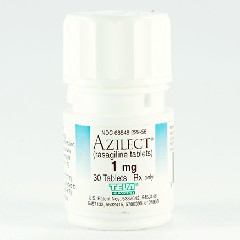
Rasagiline Mesylate (trade name: Azilect) is an oral, selective, irreversible monoamine oxidase (B (MAO-B) inhibitor, mainly used to treat Parkinson's disease (PD). Parkinson's disease is a common neurodegenerative disease with clinical features including bradykinesia, myotonia, tremor and postural instability. As the disease progresses, dopaminergic neurons are gradually lost and dopamine levels in the brain decrease, causing motor symptoms. Rasagiline delays the decomposition of dopamine by inhibiting MAO-B activity and increases dopamine concentration in the central nervous system, thereby improving motor function.
Compared with traditional levodopa treatment, rasagiline is a non-dopamine receptor direct agonist drug. It can be used alone for mild to moderate Parkinson's disease, or as a combination drug with levodopa to delay "on -off" fluctuations and reduce motor complications. It has high oral bioavailability and moderate half-life, making it convenient for patients to take it regularly every day, and it is safe for long-term use.
2. Analysis of the mechanism of action
Rasagiline blocks the dopamine degradation pathway in the brain through irreversible selective inhibitionMAO-B, thus prolonging the action time of dopamine in the synaptic cleft. Unlike non-selective MAO inhibitors, rasagiline has a very low impact on MAO-A activity, so the risk of increased blood pressure and dietary hypertension is small, and patients do not need to strictly limit tyrosine-containing foods.
In addition, research has found that rasagiline may have certain neuroprotective effects . In in vitro experiments and animal models, rasagiline can reduce oxidative stress, inhibit neuronal apoptosis, and regulate mitochondrial function, thereby delaying neurodegeneration. This property makes it a potential advantage in early intervention of the disease, which is expected to improve motor symptoms while slowing down the progression of the disease.
3. Clinical efficacy analysis
Single drug efficacy: For patients with early Parkinson's disease, rasagiline can be used alone to improve symptoms of bradykinesia, tremor and myotonia. Clinical studies have shown that patients treated with monotherapy experienced significant reductions in the Unified Parkinson's Disease Score (UPDRS) and sustained symptom improvement.
Efficacy of combination with levodopa: In patients with advanced or moderate Parkinson's disease, rasagiline is often used in combination with levodopa to prolong "on" time, reduced "off" time and the incidence of sports complications. Multiple randomized controlled trials have shown that combined medication can significantly extend the daytime "on" time by more than 1 hour and improve the quality of life without significantly increasing the risk of serious adverse events.
Improvement of non-motor symptoms: Some studies suggest that rasagiline has a certain auxiliary effect in improving sleep disorders, mild depression and fatigue, which is of great significance to the overall functional status and quality of life of patients with Parkinson's disease.
4. Clinical application value and usage suggestions
Rasagiline is indicated for patients with early-stage and moderate Parkinson's disease, especially:
As monotherapy for early-stage patients, the timing of use of dopamine receptor agonists can be delayed.
Patients in the mid-to-late stage can be combined with levodopa to control “on-off” fluctuations and extend the effective treatment time.
In clinical application, patients should take it orally once a day at a fixed time. It is usually recommended to take it in the morning to reduce the risk of insomnia. During the treatment process, UPDRS score, blood pressure and liver function need to be evaluated regularly to ensure efficacy and safety. Long-term use shows that rasagiline is well tolerated and has a low incidence of serious adverse events. The most common side effects include headache, joint pain, insomnia and mild gastrointestinal discomfort.
In addition, rasagiline's neuroprotective potential and improvement in non-motor symptoms provide a new strategy for comprehensive treatment of Parkinson's disease. Combined with the drug's safety, stable efficacy and convenient oral regimen, rasagiline has significant clinical application value in early intervention, combination treatment and delaying disease progression.
In general, rasagiline mesylate tablets increase central dopamine levels and improve motor symptoms by selectively inhibiting MAO-B, and may also have neuroprotective effects. Its single-drug effect is significant, and its combination with levodopa can further prolong the "on" time and improve the quality of life. It has mild side effects and is well tolerated, making it suitable for patients with early to moderate Parkinson's disease. Rasagiline provides a safe, effective and convenient treatment option for clinical use and is of great value in the comprehensive management of Parkinson's disease.
Reference link:https://www.drugs.com
[ 免责声明 ] 本页面内容来自公开渠道(如FDA官网、Drugs官网、原研药厂官网等),仅供持有医疗专业资质的人员用于医学药学研究参考,不构成任何治疗建议或药品推荐。所涉药品可能未在中国大陆获批上市,不适用于中国境内销售和使用。如需治疗,请咨询正规医疗机构。本站不提供药品销售或代购服务。


