
.jpeg)
Efficacy and adverse reactions of adagrasib (Krazati) combined with cetuximab
1. Background and therapeutic significance
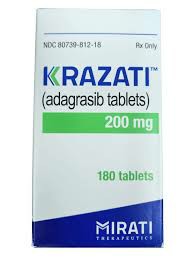
KRAS gene mutation is one of the most common driver genes in colorectal cancer (CRC), among which KRAS G12C mutation accounts for approximately 10% of all colorectal cancer mutations. 3%–4%. Since KRAS protein has long been considered an “undruggable” target, these patients lacked effective targeted drugs in the past and could only rely on traditional chemotherapy or immunotherapy, and the prognosis was often unsatisfactory. Adagrasib (Adagrasib, trade name: Krazati) is a selective, irreversible KRAS G12C inhibitor that can precisely inhibit the activity of the mutant protein. Cetuximab (Cetuximab) is an anti-EGFR monoclonal antibody, commonly used for RAS wild-type colorectal cancer. Studies have found that when KRAS G12C inhibitors are combined with anti-EGFR antibodies, they can enhance the anti-tumor effect and reduce the emergence of drug resistance mechanisms. Therefore, this combination has become a new breakthrough in precision treatment of colorectal cancer in recent years.
2. Clinical trials and efficacy data
The most critical data comes from the KRYSTAL-1 study. In this 1/2 clinical trial, a total of 94 patients carried the KRAS G12C mutation and had received standard treatments (fluoropyrimidine, oxaliplatin, irinotecan and VEGF Inhibitors), patients with advanced colorectal cancer were treated with adagrasib (600 mg twice daily) combined with cetuximab.
The results show:
The objective response rate (ORR) reached 34%, which was much higher than the 19% of adagrasib alone.
The disease control rate (DCR) is as high as 85%, indicating that most patients have achieved stable disease or tumor shrinkage.
Median duration of response (DOR) about 5.8 months, and some patients maintain curative effect for more than half a year.
The median progression-free survival (PFS) was 6.9 months, which was longer than the single-agent group (about 5.6 months).
The median overall survival (OS) can reach 15.9 months, which is a very positive result for patients who have failed multiple lines of treatment.
These data not only prove the advantages of combination therapy, but also provide a new direction for the clinical management of KRAS G12C mutated colorectal cancer. Based on these results, the US FDA has accelerated approval of this regimen for second-line and above treatment in 2024 6 months.
3. Comparison with monotherapy
Adagrasiib alone has limited efficacy in colorectal cancer. This is because KRAS G12C inhibition causes tumor cells to activate compensatory signals through the EGFR pathway, leading to drug resistance. The addition of cetuximab can effectively block this "escape" mechanism, thus improving the overall efficacy. Study data showed that the combination improved ORR from approximately 19% to 34%, DOR and PFS. It is also extended accordingly. This synergistic mechanism provides theoretical and practical basis for the combination of other KRAS inhibitors and EGFR antibodies in the future.
4. Overall situation of adverse reactions
Corresponding to efficacy, safety is an important factor that must be considered in clinical application. Overall, the adverse reactions of adagrasiib combined with cetuximab were controllable, and there were no drug-related deaths.
In clinical trials:
1.Common adverse reactions: These include: nausea, vomiting, diarrhea, loss of appetite, fatigue, rash (typical acne-like rash), dry skin, headache, and hypomagnesemia. Most of these are grade 1–2 and can be relieved with supportive treatment or a brief discontinuation of medication.
2.3–4 grade adverse reactions: The incidence rate is about 28%, mainly manifested as severe diarrhea, fatigue, elevated transaminases, hypomagnesemia, etc., but most patients can continue to take the drug through dose adjustment or symptomatic treatment.
3.Treatment adjustments: About 30% Patients need to reduce the dose due to adverse reactions, 37% Patients need to temporarily stop medication; only a few patients (about 1%–10% Permanently discontinued due to adverse reactions.
4.Serious adverse events (≥2%): including: pneumonia, pleural effusion, fever, acute kidney injury, dehydration, small intestinal obstruction, etc., but the overall incidence rate is low.
Compared with single drugs, combination therapy does not bring about new uncontrollable safety issues, which provides confidence for its promotion in clinical practice.
5. Long-term follow-up and tolerance
With the extended follow-up of the study (approximately 20 months), the efficacy data remained stable and no new safety signals were seen. It is particularly worth noting that some patients can obtain long-term survival benefits, which suggests that combined treatment may not only delay the disease, but also hope that some patients can enter a state of "long-term survival with tumors." During actual use, doctors can adjust the dose according to the patient's tolerance to prolong the treatment time as much as possible to maximize benefits.
6. Clinical application and future prospects
The approval of adagrasib combined with cetuximab represents a substantial breakthrough in KRAS targeted therapy in the field of colorectal cancer. It opens a new treatment path for patients with KRAS G12C mutations for which no drugs have been previously available. In the future, with the release of data from III controlled studies (such as KRYSTAL-10), it is expected to further verify the efficacy and safety of this combination in a wider population.
In addition, KRAS The application prospects of inhibitors are not limited to colorectal cancer, but also show value in tumors such as non-small cell lung cancer and pancreatic cancer. Exploration in combination with other targeted drugs or immunotherapy is also underway, which may lead to more personalized precision treatment options in the future.
Overall, adagrasib (Krazati) combined with cetuximab demonstrated a high response rate, considerable survival prolongation, and manageable adverse reaction spectrum in patients with KRAS G12C mutated metastatic colorectal cancer. Its clinical significance lies in: providing new options for patients who have failed multiple lines of treatment, and improving the long-standing situation of "lack of effective targeted drugs" for patients with KRAS mutations. Although more long-term studies are still needed to further confirm its efficacy and safety, the existing evidence has fully demonstrated that this combination is an important progress in the precision treatment of colorectal cancer.
Reference link:https://www.drugs.com
[ 免责声明 ] 本页面内容来自公开渠道(如FDA官网、Drugs官网、原研药厂官网等),仅供持有医疗专业资质的人员用于医学药学研究参考,不构成任何治疗建议或药品推荐。所涉药品可能未在中国大陆获批上市,不适用于中国境内销售和使用。如需治疗,请咨询正规医疗机构。本站不提供药品销售或代购服务。


