
.jpeg)
Differences and indications comparison between fenelidone (Kesenda) and eplerenone
1. Overview
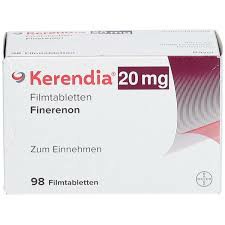
Finerenone (Finerenone) and eplerenone (Eplerenone) are both selective mineral cortical receptor antagonists (MRA). They mainly reduce cardiovascular and renal damage by blocking the aldosterone secreted by the adrenal cortex. However, there are obvious differences between the two in terms of chemical structure, selectivity, pharmacological effects and clinical indications. Understanding these differences can help clinicians choose drug regimens that are more suitable for patients, improve efficacy and reduce the risk of adverse reactions.
2. Chemical structure and pharmacological differences
1.Finerenone (Finerenone)
Finelidone belongs to nonsteroidal MRA, and its chemical structure is different from traditional steroid drugs. This non-steroidal structure gives it higher selectivity for mineral cortical receptors, relatively balanced tissue distribution, and protective effects on both the heart and kidneys. Preclinical studies have shown that fenelinone has a significant inhibitory effect on renal and cardiac fibrosis, while having a small effect on blood pressure and is unlikely to cause significant hyperkalemia.
2.Eplerenone (Eplerenone)
Eplerenone belongs to steroids MRA and works by competitively antagonizing aldosterone receptors. Compared to spironolactone (Spironolactone), eplerenone has lower affinity for androgen receptors and progesterone receptors, and therefore has fewer sex hormone-related side effects (such as breast enlargement or menstrual disturbances). However, because eplerenone is still a steroid, the distribution of the drug in the kidneys and heart is limited, and its effect on fibrosis is slightly weaker than that of fenelin.
3. Comparison of indications and clinical applications
1.Indications of fenelidone
Finelidone is mainly used for patients with chronic kidney disease (CKD) and type 2 diabetes (T2DM), especially those at high risk of proteinuria or decreased renal function. Clinical Trials FIDELIO-DKD and FIGARO-DKDShows that fenelidone can significantly reduce the risk of end-stage renal disease (ESKD) and reduce the incidence of cardiovascular events (such as heart failure, myocardial infarction). In addition, fenelidone has limited effect on raising blood pressure, so it is safer for patients with normal or slightly higher blood pressure.
2.Indications of eplerenone
Eplerenone is mainly used for patients with heart failure with reduced ejection fraction (HFrEF) and patients with heart failure after myocardial infarction to reduce cardiovascular death and heart failure hospitalization rates. In chronic kidney disease, eplerenone can also be used in patients with proteinuria, but is usually limited to patients with mild to moderate renal impairment and requires strict monitoring of serum potassium and renal function.
3. Summary of differences in indications
Overall, fenelidone shows unique advantages in CKD + T2DM high-risk patients, both protecting the kidneys and reducing the risk of cardiovascular events; while eplerenone mainly plays a central role in the management of cardiovascular diseases, especially heart failure. Although the indications of the two partially overlap, their clinical focus is different.
4. Comparison of safety and tolerance
1.The effect of blood potassium
MRA One of the main side effects is hyperkalemia. Due to its non-steroidal structure and higher selectivity, fenelinone has a lower risk of raising serum potassium than eplerenone, and is safer especially in patients with renal insufficiency. Although eplerenone has fewer side effects than spironolactone, the risk of hyperkalemia still requires vigilance, especially in patients with chronic kidney disease or those using ACEI/ARB.
2.Other side effects
The non-steroidal nature of fenelinone makes sex hormone-related side effects almost non-existent; while eplerenone has fewer side effects than spironolactone, but some patients may still experience slight breast enlargement or sex hormone disorders. In addition, both may cause mild drops in blood pressure, dizziness, or mild changes in kidney function and require regular monitoring.
5. Clinical application suggestions
In actual clinical practice, the choice of fenelidone or eplerenone should be based on the patient's disease type, renal function, blood potassium level, and comorbidities. For T2DM combined CKD high-risk patients, fenelidone can provide renal protection and cardiovascular benefits, especially for patients with significant proteinuria or eGFR low to moderate. For patients with heart failure or heart failure after myocardial infarction, eplerenone is still the first-line MRA drug and can significantly improve heart failure symptoms and survival outcomes. During use, blood pressure, electrolytes and renal function should be monitored regularly, and the dosage should be adjusted or combined with ACEI/ARB and other drugs as needed to maximize efficacy and safety.
In general, although fenelidone and eplerenone belong to the same genus MRA, they have obvious differences in chemical structure, pharmacological properties, indications and safety. Fennelidone is more suitable for CKD + T2DM high-risk patients, emphasizing renal protection and cardiovascular risk reduction; eplerenone is suitable for heart failure and cardiovascular event management, emphasizing improving heart failure outcomes. Reasonable selection of drugs and individualized management can significantly improve patients' clinical benefits while reducing the risk of adverse reactions.
Reference link:https://www.drugs.com
[ 免责声明 ] 本页面内容来自公开渠道(如FDA官网、Drugs官网、原研药厂官网等),仅供持有医疗专业资质的人员用于医学药学研究参考,不构成任何治疗建议或药品推荐。所涉药品可能未在中国大陆获批上市,不适用于中国境内销售和使用。如需治疗,请咨询正规医疗机构。本站不提供药品销售或代购服务。


