
.jpeg)
Real-world data supports tofacitinib in ulcerative colitis
Ulcerative colitis (UC) is a chronic inflammatory disease of the colon that requires treatment targeting long-term remission and quality of life (QoL). Janus kinase inhibitors, particularly Tofacitinib, are recommended for moderate to severe UC and have shown effectiveness in inducing and maintaining remission. Although clinical trials support its use, real-world data are needed to assess a wider range of outcomes, including health-related quality of life (HRQoL), fatigue, bowel urgency and extraintestinal manifestations (EIM), such as arthritis associated with irritable bowel disease.
Researchers conducted a real-world study to evaluate the impact of tofacitinib on these outcomes after induction therapy in patients with UC. The ODEN study is a prospective, multicenter, observational study of tofacitinib in patients with active UC, using data from SWIBREG to evaluate outcomes at baseline and weeks 2, 8, and 16. This interim analysis reports results at these time points. The study followed STROBE guidelines, used local laboratory protocols, and did not assess drug safety, which will be assessed separately in another post-approval safety study.
The primary outcome of the ODEN study was response at week 52 based on partial Mayo (p-Mayo) score. The interim analysis reported secondary and exploratory outcomes at weeks 2, 8 and 16, including tofacitinib retention, clinical response and remission (by p-Mayo and symptom scores), glucocorticoid-free remission, bowel urgency and markers of inflammation such as C-reactive protein and fecal calprotectin (FC). Other measures included endoscopic results, colectomy rates, dose and changes in health-related quality of life (HRQoL) scores, including the Short Health Scale (SHS), European Quality of Life 5 Dimensions 5 Levels (EQ-5D-5L) and Inflammatory Bowel Disease Fatigue (IBD-F) scale. Exploratory outcomes included improvement in EIM and response to the composite endpoint of endoscopic or FC. Clinical and symptomatic outcomes are precisely defined using an established scoring system.
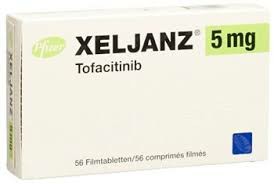
The study included103 adult patients with activeUC who initiated treatment withtofacitinibat multiple sites. The majority (65%) had extensive disease, and 95% had experienced at least one prior biologic treatment failure, 62% had experienced two treatment failures, and 37% had experienced three or more treatment failures. At the baseline examination, 39% of patients were receiving corticosteroids, and all patients were initiated on tofacitinib 10 mg twice daily. Only two patients were unfamiliar with both immunomodulators and biologics. Over a period of 16 weeks, three patients withdrew their consent and their data were included before the withdrawal.
Among patients with active UC treated with tofacitinib, retention rates were 83% at week 8 and 78% at week 16. Three patients (3%) underwent colectomy and 9% were switched to another biologic. At week 16, 62% of patients continued taking the full dose (10 mg twice daily), while 38% reduced the dose to 5 mg twice daily. The mean p-Mayo score improved from 4.7 at baseline to 2.0 at week 16, and corticosteroid use decreased from 39% to 8%.
Symptom scores (number of stools plus rectal bleeding) improved rapidly, and by week the proportion of patients reporting no bowel urgency had tripled. Arthralgia was 29% at baseline and decreased to 11% at week 16. FC levels were significantly reduced (from 980mg/kg to 140mg/kg). According to the combined endoscopic/FC criteria, the endoscopic response rate was 30% at week 8 and 38% at week 16, with only the endoscopic response rate slightly higher.
Tofacitinibtreatment significantly improved HRQoL at week 8, with sustained or further improvement at week 16. All four dimensions of the SHS (symptoms, social functioning, disease-related worries, and general well-being) showed significant improvements. EQ-5D-5L scores revealed baseline impairments related to pain/discomfort and participation in daily activities, both of which improved significantly at weeks 8 and 16. Patients also reported better overall health on the European Quality of Life Visual Analog Scale. Fatigue levels, measured on the IBD-F scale by IBD-F1 and F2, improved significantly at both follow-up points.
In summary, induction therapy with tofacitinib was observed to be associated with improvements in patient-reported symptoms, joint pain, HRQoL and fatigue, and outcome measures of endoscopic activity. These real-world data demonstrate that tofacitinib is a rapidly effective treatment for UC and UC-related morbidity.
Reference materials:https://www.docwirenews.com/post/real-world-data-support-tofacitinib-for-ulcerative-colitis
[ 免责声明 ] 本页面内容来自公开渠道(如FDA官网、Drugs官网、原研药厂官网等),仅供持有医疗专业资质的人员用于医学药学研究参考,不构成任何治疗建议或药品推荐。所涉药品可能未在中国大陆获批上市,不适用于中国境内销售和使用。如需治疗,请咨询正规医疗机构。本站不提供药品销售或代购服务。


