
.jpeg)
Adjuvant cemiplimab may become new standard of care for high-risk CSCC
According to research published in 2025, the adjuvant cemiplimab (Cemiplimab) can improve disease-free survival (DFS) in patients with cutaneous squamous cell carcinoma (CSCC) who have completed adjuvant radiation therapy and are at high risk of recurrence. As adjuvant therapy for patients at high risk of CSCC recurrence, cimepilimab is the only systemic treatment to achieve a statistically significant and clinically meaningful reduction in disease recurrence. Adjuvant cimipilimab represents a potential new standard of care for this patient population.
The adjuvant cimepilimab was evaluated inthe phase 3 C-POST trial (NCT03969004). The trial included 415 patients with CSCC with high-risk characteristics. The patient underwent surgery and completed postoperative radiotherapy. Patients were randomly assigned to receive cimipilimab (n=209) or placebo (n=206). Patients enrolled before the protocol revision received 350 mg (n = 38) or placebo (n = 43) every 3 weeks for 48 weeks. Patients enrolled after the revision received 350 mg of cimipilimab or placebo every 3 weeks for 12 weeks, followed by 700 mg of cimepilimab (n = 171) or placebo (n = 163) every 6 weeks for 36 weeks. After disease relapse, patients can be transferred to cimepilimab treatment.
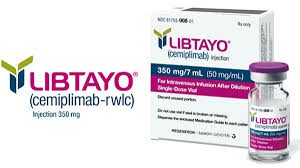
Baseline characteristics were generally well balanced between treatment groups. The median age was 71 years in the cimepilimab group and 70.5 years in the placebo group. 79% and 86% of patients had tumors located in the head and neck respectively.
At a median follow-up of 24 months, median DFS was not reached in the cimipilimab group compared with 49.4 months in the placebo group (hazard ratio [HR], 0.319; 95% CI, 0.199-0.511; P<.0001). The 24-month DFS rate was 87.1% in the cimepilimab group and 64.1% in the placebo group. The 36-month DFS rates were 83.1% and 60.4% respectively. Patients who received the modified dosing regimen of cimepilimab had a greater benefit in DFS (HR, 0.25; 95% CI: 0.14-0.45) compared with patients who received the original dosing regimen (HR, 0.44; 95% CI, 0.18-1.09). Patients who received cimipilimab were less likely to experience local recurrence (HR, 0.20; 95% CI, 0.09-0.40) or distant recurrence (HR: 0.35; 95% CI, 0.17-0.72) compared with placebo.
Overall survival rate (OS) data are immature, although there was a trend toward improved OS with cimepilimab (HR, 0.78; 95% CI, 0.39-1.56).
Treatment-related adverse events (AEs) occurred in 62% of patients in the cimepilimab group and 46% of patients in the placebo group. Grade 3 or higher treatment-related adverse events occurred in 10% and less than 1% of patients, respectively. There was 1 treatment-related death (myositis) in the cimepilimab group. Immune-mediated adverse events occurred in 23% of patients in the cimepilimab group and 6% of patients in the placebo group. Seven percent of patients in the cimepilimab group had grade 3 or higher immune-mediated adverse events. There were no such adverse events in the placebo group.
The most common treatment-emergent adverse events (in cimipilimab and placebo groups, respectively) were fatigue (22% in both groups), diarrhea (16% and 19%), pruritus (16% and 12%), rash (16% and 9%), arthralgia (13% and 12%), hypothyroidism (12% and 3%), and maculopapular rash (11% and 6%).
Reference materials:https://www.oncologynurseadvisor.com/reports/cemiplimab-standard-care-cscc/
[ 免责声明 ] 本页面内容来自公开渠道(如FDA官网、Drugs官网、原研药厂官网等),仅供持有医疗专业资质的人员用于医学药学研究参考,不构成任何治疗建议或药品推荐。所涉药品可能未在中国大陆获批上市,不适用于中国境内销售和使用。如需治疗,请咨询正规医疗机构。本站不提供药品销售或代购服务。


