
.jpeg)
New immunotherapy targets locally advanced non-small cell lung cancer builds on durvalumab
Although durvalumab/durvalumab following concurrent chemoradiotherapy remains the standard of care as examined in the PACIFIC phase 3 trial (NCT02125461), new immunotherapy regimens are being developed to provide additional treatment options for patients with locally advanced non-small cell lung cancer (NSCLC). The older version of PACIFIC is still the standard of care, but there are many new ‘flavors’.
PACIFIC compared durvalumab with placebo in patients with unresectable stage III NSCLC who had not experienced disease progression after concurrent chemoradiotherapy. 2 The 5-year survival analysis of the study showed that the median progression-free survival (PFS) was 16.9 months (95% CI, 13.0-23.9) in the study group (n=476) and 5.6 months (95% CI, 4.8-7.7) in the placebo group (n=237; stratified HR, 0.55; 95% CI, 0.45-0.68). The median overall survival (OS) values u200bu200bwere 47.5 months (95% CI, 38.1-52.9) and 29.1 months (95% CI, 22.1-35.1) respectively (stratified HR, 0.72; 95% CI, 0.59-0.89).
The benefits of durvalumab are also reflected in real-world populations, based on data from the observationalPACIFIC-R study (NCT03798535). Median OS among patients (n = 1154) who received durvalumab was not reached (NR; 95% CI, 46.3 not evaluable [NE]). The 2-year and 3-year OS rates were 72.3% (95% CI, 69.7%-74.8%) and 63.2% (95% CI, 60.3%-65.9%) respectively. The median progression-free survival was 24.1 months (95% CI, 20.2-27.8); the 2-year progression-free survival rate was 50.1% (95% CI, 47.2%-53.0%), and the 3-year progression-free survival rate was 42.2% (95% CI, 39.2%-45.1%).
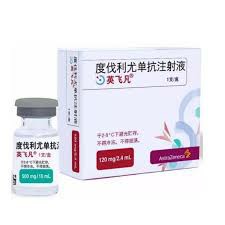
In thePACIFIC-6 phase 2 trial (NCT03693300), the safety and efficacy of durvalumab was evaluated following sequential chemoradiotherapy in patients with stage III unresectable non-small cell lung cancer. Patients (n=117) who received durvalumab had a median PFS of 10.9 months (95% CI, 7.3-15.6) and a median OS of 25.0 months (95% CI, 25.0-NE). Patients were enrolled in the trial if they were not suitable for concurrent treatment. The benefits are clear and treatment is possible.
There is no benefit in starting immunotherapy with chemoradiation. Results from the phase 3 PACIFIC-2 trial (NCT03519971) showed that patients (n=219) who received durvalumab plus chemoradiotherapy had a median progression-free survival of 13.8 months (95% CI, 9 .5-16.9) compared with 9.4 months (95% CI, 7.5-16.6) among those who received chemoradiotherapy alone (n=109; HR, 0.85; 95% CI, 0.65-1.12; P=0.247). The crossing of the OS curve was associated with an increase in the number of adverse reactions leading to discontinuation of the PACIFIC-2 regimen and chemoradiotherapy.
In a phase 3 study (NCT04026412) of CheckMate 73L, researchers compared nivolumab plus concurrent chemoradiotherapy, followed by nivolumab with or without ipilimumab, with the PACIFIC regimen. The median progression-free survival of patients in the study group (n=287) was 16.7 months (95% CI, 12.6-22.0), compared with 15.6 months in the control group. (n=318; HR, 0.95; 95%CI, 0.77-1.19; P=0.6460).
The Phase 3 study of GEMSTONE-301 (NCT03728556) is a Chinese trial evaluating the PD-L1 inhibitor sugemlimab versus placebo in patients with locally advanced, unresectable stage III non-small cell lung cancer who have not experienced disease progression after concurrent or sequential chemoradiotherapy. Interim analysis data from GEMSTONE-30 showed that the median PFS was 9.0 months (95% CI, 8.1-14.1) in the sugamlimab arm (n = 255) and 5.8 months (95% CI, 4.2-6.6) in the placebo arm (n = 126; stratified HR, 0.64; 95% CI, 0.48-0.85; log-rank P = 0.0026).
The PD-1 inhibitor toripalimab (toripalimab) is being evaluated in patients with bulky, unresectable stage III non-small cell lung cancer in the Phase 2 InTRist study (NCT05888402). Research results published by InTRist in 2025 showed that the median progression-free survival (95%CI, NR-NR) of patients who received toripalimab + chemotherapy was 12.4 months (95%CI, 8.0-NR) compared with patients who received chemotherapy alone (n=25; HR, 0.26; 95%CI, 0.08-0.81; log-rank P=0.012). The 1-year progression-free survival rates were 85.6% (95% CI, 71.6%-100.0%) and 54.5% (95% CI, 37.7%-78.7%) respectively. Combining chemotherapy and immunotherapy to treat PFS has [benefit] compared with chemotherapy alone. But there are no results on OS yet, and larger studies are needed (to obtain more data).
In the COAST phase 2 trial (NCT03822351), durvalumab was examined in combination with several novel agents. The results of the COAST study showed that patients receiving durvalumab + monalizumab (n=62) or durvalumab + oleclumab (n=62)n=60), the median progression-free survival of patients treated was 15.1 months (95% CI, 13.6-NE) u200bu200band NR (95% CI, 10.4-NE) respectively. In comparison, the median progression-free survival for patients who received durvalumab monotherapy was 6.3 months (95% CI, 3.7-11.2); using the monotherapy arm as a reference, the HR for PFS was 0.42 (95% CI, 0.24-0.72) in the monalizumab group and 0.44 (95% CI: 0.26-0.75) in the oleclumab group. The 12-month progression-free survival rates for the monalizumab, oleclumab, and durvalumab monotherapy groups were 72.7% (95% CI, 58.8%-82.6%), 62.6% (95% CI, 48.1%-74.2%), and 33.9% (95% CI-21.2%-47.1%), respectively.
[At COAST], saw good PFS data in the combination arm, and there was some benefit in patients with PD-L1-negative disease that we didn't see with durvalumab alone. Proton pump inhibitors (PPIs) should not be added to the PACIFIC regimen. A post hoc analysis of PACIFIC showed that median PFS was 10.7 months in patients exposed to PPIs (n=185) compared with 18.1 months in patients not exposed to PPIs (n=265; P=0.017). [These data] suggest that adding PPIs reduces the [efficacy] of immunotherapy, [but] there's still a lot of uncertainty.
References:https://www.onclive.com/view/new-immunotherapy-regimens-aim-to-build-upon-durvalumab-in-locally-advanced-nsclc
[ 免责声明 ] 本页面内容来自公开渠道(如FDA官网、Drugs官网、原研药厂官网等),仅供持有医疗专业资质的人员用于医学药学研究参考,不构成任何治疗建议或药品推荐。所涉药品可能未在中国大陆获批上市,不适用于中国境内销售和使用。如需治疗,请咨询正规医疗机构。本站不提供药品销售或代购服务。


