
.jpeg)
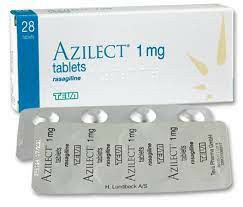
Analysis of the biggest advantages and clinical use value of rasagiline (Azila)
Rasagiline (Rasagiline) is a selective, irreversible inhibitor of monoamine oxidase B (MAO-B). It is mainly used to treat patients with early-stage Parkinson's disease (PD) or in patients with advanced stages of Parkinson's disease (PD) combined with levodopa. Its mechanism of action is to reduce the decomposition of dopamine in the brain by inhibiting MAO-B enzyme activity, thereby increasing dopamine levels in the brain and improving motor symptoms. Compared with traditional Parkinson's disease drugs, rasagiline has unique pharmacological advantages and broad clinical application value.
First of all, rasagiline has significant advantages in terms of efficacy and drug safety. As monotherapy, rasagiline improves tremor, stiffness, and bradykinesia in patients with early-stage Parkinson's disease and is well tolerated. Studies have shown that rasagiline can significantly delay disease progression and improve patients' quality of life. When used in combination with levodopa, rasagiline can prolong the "ON" time, reduce the "OFF" time and movement fluctuations, allowing patients to maintain relatively stable motor functions in daily life. This feature makes rasagiline have important clinical value in early and late treatment.
Secondly, rasagiline has excellent performance in managing drug interactions and side effects. It is a selective MAO-B inhibitor that does not easily interact with MAO-A enzyme. Therefore, it has fewer restrictions on blood pressure and tyrosine in food. Patients do not need to strictly follow the "tyrosine diet" and it is more convenient to use. At the same time, the side effects of rasagiline are mild. Common adverse reactions include headache, joint pain and mild indigestion. Serious cardiovascular or psychiatric side effects are rare. This characteristic makes it particularly suitable for elderly patients with Parkinson's disease and those who take long-term medication.
In addition, rasagiline has shown potential value in neuroprotection and slowing disease progression. Multiple studies have shown that rasagiline may have neuroprotective effects and delay the pathological progression of Parkinson's disease by reducing neuronal apoptosis and oxidative stress. Although its neuroprotective effect still needs further clinical verification, in patients with early intervention, rasagiline can provide more options for disease management, allowing patients to achieve a longer period of stability in terms of life function and exercise ability.
Taken together, the biggest advantages of rasagiline are its selective MAO-B inhibition, good tolerability, ease of use, and comprehensive performance in motor symptom control and possible neuroprotective effects. In clinical practice, whether used as early monotherapy or in combination with levodopa for mid-to-late Parkinson's disease, rasagiline can significantly improve patients' motor symptoms and reduce "OFF"Time and improve the quality of life. At the same time, its good safety and convenient medication regimen enable patients to use it regularly for a long time, providing important support for the systematic management of Parkinson's disease. Therefore, the clinical application value of rasagiline in the modern treatment of Parkinson's disease cannot be ignored, and it is one of the important drugs that clinicians prioritize in individualized treatment plans.
Reference link:https://www.drugs.com
[ 免责声明 ] 本页面内容来自公开渠道(如FDA官网、Drugs官网、原研药厂官网等),仅供持有医疗专业资质的人员用于医学药学研究参考,不构成任何治疗建议或药品推荐。所涉药品可能未在中国大陆获批上市,不适用于中国境内销售和使用。如需治疗,请咨询正规医疗机构。本站不提供药品销售或代购服务。


