
.jpeg)
Is durvalumab/Infinifer a targeted or immune drug?
Durvalumab/Infinifer (Durvalumab) is not a targeted drug in the traditional sense, but an immunotherapy drug. It is a PD-L1 inhibitor, whose full name is human immunoglobulin G1κ (IgG1κ) monoclonal antibody. It is a typical immune checkpoint inhibitor.
The main feature of targeted drugs is to target specific gene mutations or signaling pathways within or on the surface of tumor cells and inhibit tumor growth through precise blocking. For exampleEGFR inhibitors or ALK inhibitors are often only effective for specific groups of people. The mechanism of durvalumab is different. It does not depend on the genetic mutation of the tumor, but works by acting on the interaction between the immune system and tumor cells. 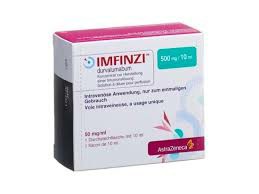
Under normal circumstances, tumor cells will "disguise" by expressing PD-L1 molecules to evade immune cell attack. Durvalumab can bind to PD-L1 and block its binding to the PD-1 receptor on T cells, thereby relieving this immune suppression and allowing the body's immune cells to resume activity and re-recognize and eliminate cancer cells.
In clinical applications, the immune mechanism of durvalumab allows it to be used in the treatment of a variety of tumors, including small cell lung cancer, non-small cell lung cancer, endometrial cancer, cholangiocarcinoma, liver cancer, bladder cancer, etc. Compared with traditional targeted drugs, its applicable population is wider and is not limited to patients with a certain type of gene mutation, which makes it gradually occupy an important position in comprehensive treatment of tumors.
It is worth emphasizing that immune drugs are not effective for everyone. The efficacy of durvalumab is related to the patient's immune status, tumor microenvironment andPD-L1 expression level. Therefore, doctors usually use pathological testing, immunohistochemical analysis, etc. to determine whether a patient is suitable for this type of drug. In addition, the side effects of immunotherapy are also different from traditional targeted drugs. It may trigger immune-related inflammatory reactions, such as rash, thyroid dysfunction or lung inflammation, which need to be dealt with in a timely manner under the supervision of the team.
Reference materials:https://www.imfinzi.com/
[ 免责声明 ] 本页面内容来自公开渠道(如FDA官网、Drugs官网、原研药厂官网等),仅供持有医疗专业资质的人员用于医学药学研究参考,不构成任何治疗建议或药品推荐。所涉药品可能未在中国大陆获批上市,不适用于中国境内销售和使用。如需治疗,请咨询正规医疗机构。本站不提供药品销售或代购服务。


