
.jpeg)
The difference between margetuximab/magenex and trastuzumab
Margetuximab and Trastuzumab, as HER2-targeted therapeutic drugs, both play an important role in the treatment of HER2-overexpressing tumors such as breast cancer and gastric cancer, but there are significant differences between them. Trastuzumab is the earliest approved HER2 monoclonal antibody, bringing breakthrough therapeutic effects to HER2-positive patients, while margetuximab is an optimized antibody subsequently developed. Its design concept is to improve the immune effect and improve the durability of the therapeutic effect.
From a molecular structure point of view, the binding targets of both are the same, locking on the extracellular domain of HER2, thereby blocking the downstream signaling pathway. However, margetuximab has been engineered on the Fc fragment to enhance its affinity with activating Fcγ receptors and at the same time reduce its binding ability to inhibitory receptors. The practical effect of this difference is that magituximab can better recruit immune effector cells and improve antibody-dependent cell-mediated cytotoxicity (ADCC), which may have additional benefits for some patients who are resistant to trastuzumab in clinical applications.
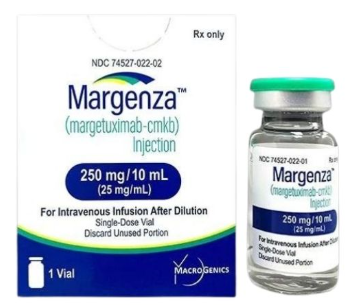
In terms of mechanism of action, trastuzumab mainly relies on blockingHER2 signaling and some immune effects, while the "immune optimization" properties of margetuximab enable it to stronger activate the body's own immune response, especially when the patient's FcγRIIIa receptor genotype is a low-affinity type. This is more likely to benefit, which has been valued in multiple studies. This means that the development of margetuximab is not just a simple replacement, but a precise improvement based on the differential responses among patient groups.
From a clinical application perspective, trastuzumab has been widely used around the world and has become the basic drug for HER2-targeted therapy, while margetuximab is more considered for use in patients who have previously received trastuzumab or other HER2 drug treatments but still progressed. It is positioned closer to a "modified and upgraded version" by changing the immune effector profile to cover those patient populations where trastuzumab may not be sufficient for sustained control. There is a view in overseas guidelines that for patients at risk of trastuzumab resistance, margetuximab may bring continued therapeutic value, especially when combined with chemotherapy, showing certain advantages.
In terms of drug development trends, trastuzumab has experienced an evolution from intravenous infusion to subcutaneous injection dosage forms, and has formed a new treatment standard in combination with other drugs. Margetuximab represents another innovative direction, which is to optimize immune effects through molecular engineering technology. The two are not simply a substitution relationship, but constitute a multi-level system ofHER2 targeted therapy. As the trend of combining immunotherapy with targeted drugs becomes more and more obvious, the emergence of margetuximab also indicates that the future development direction of antibody drugs may focus more on improving the basic immunology.
In general, the differences between margetuximab and trastuzumab are mainly reflected in the immune effect enhancement mechanism, clinical application positioning and optimized design of molecular engineering. Trastuzumab has set a milestone for HER2-targeted therapy, and on this basis, margetuximab improves immune efficacy by optimizing the Fc structure, providing a new treatment option for some patients.
Reference materials:https://www.margenza.com/
[ 免责声明 ] 本页面内容来自公开渠道(如FDA官网、Drugs官网、原研药厂官网等),仅供持有医疗专业资质的人员用于医学药学研究参考,不构成任何治疗建议或药品推荐。所涉药品可能未在中国大陆获批上市,不适用于中国境内销售和使用。如需治疗,请咨询正规医疗机构。本站不提供药品销售或代购服务。


