
.jpeg)
Is durvalumab/Infinifer a targeted drug?
Durvalumab/Infinifer (Durvalumab) is an immune checkpoint inhibitor that is an anti-PD-L1 monoclonal antibody and is not a targeted drug in the traditional sense. Many patients tend to confuse it with targeted therapy when they hear "monoclonal antibody". In fact, there are significant differences in the mechanism of action between the two.
Targeted drugs usually target specific gene mutations, receptors or signaling pathways for precise inhibition, such as tyrosine kinase inhibitors for EGFR mutations or HER2-positive antibody drugs. The mechanism of action of durvalumab is to block the binding of PD-L1 to the PD-1 receptor, thereby releasing the immunosuppressive effect of tumors on T cells, allowing the body's immune system to re-recognize and attack tumor cells. This "immune activation" approach is classified as tumor immunotherapy, rather than targeted therapy.
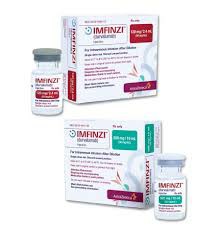
As aPD-L1 inhibitor, durvalumab has shown potential in a variety of malignant tumors, especially innon-small cell lung cancer and small cell lung cancer. It is approved for maintenance treatment after radiotherapy and chemotherapy, and can also be used in combination with chemotherapy for some patients with advanced disease. In clinical practice, its advantage is that it can provide a longer-lasting immune response, and the efficacy is not limited to a single mutation group, but is closely related to the expression level of PD-L1.
From the perspective of drug classification, durvalumab is an "immune checkpoint inhibitor" rather than a "targeted drug". This difference is not only reflected in the mechanism, but also affects clinical application strategies. Targeted drugs are often suitable for patient groups with clear genetic mutations, while immunotherapy puts more emphasis on screening people through biomarkers such as PD-L1 levels.
Therefore, patients need to make a clear distinction when understanding durvalumab: it is an immunotherapy drug, not a traditional targeted drug. Both types of drugs play an important role in the cancer treatment system, but their focus and applicable groups are different. A correct understanding of this point can help patients and doctors weigh the pros and cons more scientifically when choosing treatment options, thereby achieving more ideal results.
Reference materials:https://www.imfinzi.com/
[ 免责声明 ] 本页面内容来自公开渠道(如FDA官网、Drugs官网、原研药厂官网等),仅供持有医疗专业资质的人员用于医学药学研究参考,不构成任何治疗建议或药品推荐。所涉药品可能未在中国大陆获批上市,不适用于中国境内销售和使用。如需治疗,请咨询正规医疗机构。本站不提供药品销售或代购服务。


