
.jpeg)
Durvalumab/Infinifer versus pembrolizumab
In recent years, the application of immune checkpoint inhibitors in tumor treatment has gradually matured. Among them, durvalumab/Infinifer (Durvalumab) and pembrolizumab (trade name: Keytruda) are both PD-1/PD-L1 pathway-related drugs. However, there are differences in their mechanisms of action, scope of indications, clinical application strategies and market layout. For patients and doctors, an in-depth understanding of the differences between these two drugs will help make more precise choices for different cancer types and treatment stages.
From the perspective of its target, pembrolizumab is a PD-1 monoclonal antibody that directly binds to the PD-1 receptor on the surface of T cells and blocks its binding to PD-L1 and PD-L2, thereby restoring the immune response of T cells to tumors. Imrvalumab is a PD-L1 monoclonal antibody that blocks the binding of PD-L1 to PD-1 and relieves tumor cells from suppressing the immune system. Although both act on the same immune checkpoint pathway, they block at different locations. PD-1 inhibitors tend to cover a wider range of immune pathway regulation, while PD-L1 inhibitors have relatively more controllable side effects in theory, and are considered to be more advantageous in reducing immune-related inflammatory responses.
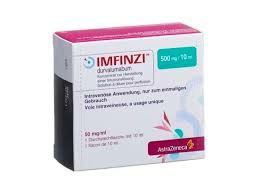
From the perspective of indications, pembrolizumab is one of the most widely used PD-1 inhibitors in the world. It has been approved for use in a variety of solid tumors such as melanoma, non-small cell lung cancer, head and neck squamous cell carcinoma, cervical cancer, esophageal cancer, and hepatocellular carcinoma, and has become the first-line standard treatment for some cancer types. It has also established a benchmark position in the field of immunotherapy with the data of multiple international large-scale clinical trials. However, durvalumab is more targeted in terms of indications. It is widely used in maintenance treatment after radiotherapy and chemotherapy in non-small cell lung cancer, and in combination chemotherapy regimens in small cell lung cancer. It is considered to be one of the important options for consolidation treatment after radiotherapy and chemotherapy. In the European and American markets, durvalumab has established a high level of awareness, especially among patients with stage III non-small cell lung cancer.
In terms of clinical application strategy, due to its wide range of indications, pembrolizumab often plays a role in multiple aspects of immunotherapy, including first-line treatment, combination therapy, and single-drug maintenance. Durvalumab focuses on consolidation therapy at specific disease stages. It emphasizes prolonging progression-free survival after radiotherapy and chemotherapy and preventing disease recurrence by activating immune responses. This difference makes durvalumab and pembrolizumab not completely substitutes in the clinical path, but complementary. The specific selection requires a comprehensive judgment based on the patient's tumor type, stage, PD-L1 expression level and tolerance.
From the perspective of adverse reactions, the types of immune-related side effects of the two are similar, including rash, thyroid dysfunction, pneumonia and enteritis, etc., but the frequency and severity may vary among different groups of people. Some studies suggest that the incidence of immune-related toxicity of PD-L1 inhibitors such as durvalumab is slightly lower than that of PD-1 inhibitors. However, in terms of efficacy, PD-1 inhibitors such as pembrolizumab show stronger survival benefits in certain cancer types.
In general, durvalumab and pembrolizumab are both immune checkpoint inhibitors, but one targets PD-L1 and the other targets PD-1. Pembrolizumab has more advantages in terms of breadth of indications and market popularity, while durvalumab occupies a unique position in specific treatment stages.
Reference materials:https://www.imfinzi.com/
[ 免责声明 ] 本页面内容来自公开渠道(如FDA官网、Drugs官网、原研药厂官网等),仅供持有医疗专业资质的人员用于医学药学研究参考,不构成任何治疗建议或药品推荐。所涉药品可能未在中国大陆获批上市,不适用于中国境内销售和使用。如需治疗,请咨询正规医疗机构。本站不提供药品销售或代购服务。


