
.jpeg)
What information does the package insert for Veentuzumab/Besifux contain?
Enfortumab is a novel targeted anti-cancer monoclonal antibody indicated for the treatment of adult patients with locally advanced or metastatic urothelial carcinoma (mUC; bladder cancer). As a targeted therapy, venetuzumab specifically recognizes tumor cell surface proteins and mediates antibody-dependent cytotoxicity, thereby directly inhibiting the proliferation and growth of cancer cells and providing a new treatment option for patients who are resistant to traditional chemotherapy and immunotherapy.
The indications are clearly stated in the instructions. First, veentuzumab can be used in combination with pembrolizumab to treat patients with locally advanced or metastatic urothelial carcinoma. This combination regimen is suitable for patients who have previously received PD-1 or PD-L1 inhibitors and platinum-containing chemotherapy. It can enhance the anti-tumor immune response and improve the disease control rate. Second, venetuzumab can be used as a single agent in patients with locally advanced or metastatic urothelial cancer who may not be candidates for cisplatin-containing chemotherapy or who have received one or more other prior therapies without satisfactory response. The instructions emphasize that the use of veentuzumab should be carried out under the guidance of a doctor, and the indications and treatment duration requirements should be strictly followed to ensure the safety and effectiveness of the treatment.
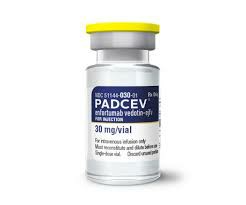
With regard to dosage, veentuzumab has different regimens, depending on whether it is used in combination with pembrolizumab. When used in combination, the recommended dose is 1.25 mg/kg (the maximum dose for patients weighing ≥100 kg is 125 mg), administered via intravenous infusion over 30 minutes on days 1 and 8 of a 21-day cycle, and continued until disease progression or intolerable toxicity. When used as a single drug, the recommended dose is also 1.25 mg/kg (the maximum dose for patients weighing ≥100 kg is 125 mg), which should be infused intravenously for 30 minutes on days 1, 8, and 15 of a 28-day cycle until disease progression or unacceptable adverse reactions occur. During the infusion process, a professional medical team is required to ensure the safety of the intravenous access and monitor for infusion-related reactions.
The instructions for veentuzumab also remind patients and medical staff to pay attention to potential adverse reactions, such as fatigue, rash, peripheral neuropathy or blood sugar fluctuations, and to conduct regular hematology, liver function and renal function monitoring. At the same time, for patients taking combination drugs, attention should also be paid to immune-related adverse events to ensure timely detection and treatment. The instructions emphasize that patients should strictly abide by the dosage and cycle during use and avoid adjusting the dosage or stopping the medication early to avoid affecting the efficacy or increasing the risk of side effects.
Overall, as a targeted anti-cancer drug, the instructions for veentuzumab not only list the indications, usage and dosage, and adverse reaction tips in detail, but also provide guidelines for patient management and safety monitoring. Through standardized use, patients can obtain new treatment options after failure of multiple lines of treatment, improving the control rate and quality of life of urothelial cancer. Its launch provides practical targeted treatment options for patients who are resistant or unable to tolerate traditional chemotherapy, and reflects the development trend of individualization and precision in modern tumor treatment.
Reference: https://www.padcev.com/
[ 免责声明 ] 本页面内容来自公开渠道(如FDA官网、Drugs官网、原研药厂官网等),仅供持有医疗专业资质的人员用于医学药学研究参考,不构成任何治疗建议或药品推荐。所涉药品可能未在中国大陆获批上市,不适用于中国境内销售和使用。如需治疗,请咨询正规医疗机构。本站不提供药品销售或代购服务。


