
.jpeg)
Can Napavir/Salanka cure AIDS?
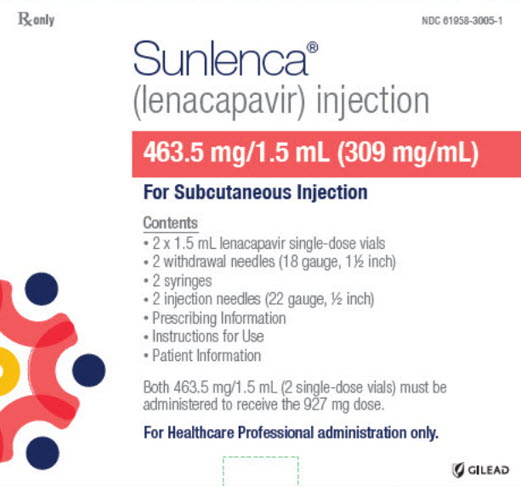
Since Sunlenca was approved by the US FDA at the end of 2022, it has been considered a breakthrough drug in the field of anti-HIV (AIDS) treatment. Its emergence brings new hope to patients who have long been troubled by multidrug resistance.
First of all, from the perspective of drug mechanism, lenapavir sodium is the world's firstHIV-1 capsid inhibitor, which blocks HIV replication at different stages by interfering with the assembly and function of the viral capsid. This is completely different from traditional reverse transcriptase inhibitors or protease inhibitors. It no longer targets a single link, but covers multiple key steps in the virus life cycle. Therefore, the antiviral effect of lenapavir sodium is more durable and shows strong efficacy in patients with multidrug resistance. At the same time, its injection form can be maintained once every six months, greatly improving patient compliance and quality of life. However, even with such a unique mechanism of action, it still cannot completely eliminate HIV reservoirs in the body.
The reason why HIV is difficult to cure is that it can integrate genetic material into the genome of host cells and lie dormant in certain immune cells for a long time. When antiviral drugs inhibit viral replication, the latent virus reservoir will not be completely eliminated, and the virus may still reactivate once the drug is discontinued or the immune environment changes. Therefore, all existing antiretroviral drugs, including lenapavir sodium, can only achieve "functional suppression", that is, reducing the viral load to an undetectable level, thus preventing immune system damage and disease progression, but they cannot truly cure AIDS.
Secondly, from the perspective of clinical application, lenapavir sodium is mainly positioned for use in multidrug-resistant HIV-1-infected adult patients, especially those who have poor response to existing drugs or have limited treatment options. In such patients, it can significantly improve treatment success when used in combination with other drugs. It is worth noting that lenapavir sodium is not a "panacea" used alone, but is highly dependent on combination regimens to achieve the best inhibitory effect. This also means that its value is more reflected in improving the feasibility and continuity of long-term treatment rather than solving the problem of viral infection in one go.
From the perspective of global scientific research trends, the real direction of curing AIDS mainly focuses on two types of strategies: one is to completely eliminate the virus reservoir through gene editing, stem cell transplantation and other means; the other is to enhance the body's ability to clear the virus latent reservoir through immunological methods. Although the long-acting mechanism of lenapavir sodium has greatly improved the patient's lifestyle, it still belongs to the category of antiviral drugs and does not touch the core difficulty of curing HIV. Therefore, it is unscientific to define it as a "curative drug" at this stage.
However, this does not mean that lenapavir sodium is not a milestone. In fact, it represents a new paradigm shift in HIV treatment from "daily medication" to "six-monthly medication", which not only reduces patients' psychological and social burden, but also provides more guarantees for long-term HIV suppression. More importantly, it lays the foundation for the development of more long-acting and even implantable antiviral agents in the future.
Reference materials:https://www.drugs.com/sunlenca.html
[ 免责声明 ] 本页面内容来自公开渠道(如FDA官网、Drugs官网、原研药厂官网等),仅供持有医疗专业资质的人员用于医学药学研究参考,不构成任何治疗建议或药品推荐。所涉药品可能未在中国大陆获批上市,不适用于中国境内销售和使用。如需治疗,请咨询正规医疗机构。本站不提供药品销售或代购服务。


