
.jpeg)
Approved indications of adagrasib (Krazati) and possible future therapeutic areas expansion
Adagrasiib (Krazati) is an oral small molecule KRAS G12C inhibitor, mainly used for patients with KRAS G12C mutation-positive advanced or metastatic non-small cell lung cancer (NSCLC). KRAS G12C is one of the common driver mutations in NSCLC. Its mutated form will continuously activate the RAS/MAPK signaling pathway and promote tumor cell proliferation and survival. Adagrasib selectively inhibits the activity of KRAS G12C protein and restores it to an inactive state, thereby blocking downstream signaling and inhibiting tumor growth. Based on this mechanism, the drug has been approved in the United States and some countries for the treatment of patients with advanced NSCLC who still have KRAS G12C mutations after first-line treatment.
The currently approved indications are mainly second-line or third-line treatment of advanced or metastatic non-small cell lung cancer. Adagrasiib is typically targeted to patients who have received prior chemotherapy or immunotherapy and who require new targeted treatment options due to tumor progression or drug resistance. Clinical trial data show that the drug can significantly delay disease progression in patients with KRAS G12C mutations and achieve tumor shrinkage in some patients. It is also well tolerated and provides an important new treatment option for advanced patients.
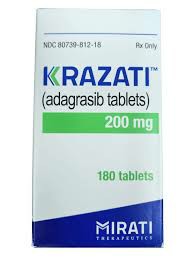
In the future, the indications of adagrasib may be further expanded to other KRAS G12C mutation-related solid tumors. For example, KRAS G12C mutations are also found in colorectal cancer, pancreatic cancer and certain biliary tract tumors. These tumor types have limited response to existing targeted drugs. Based on its mechanism of specifically inhibiting KRAS G12C, adagrasib is expected to show effectiveness in clinical trials, thereby providing targeted treatment options for more patients with solid tumors.
In addition, combination therapy is an important direction for the future development of adagrasib. Clinical studies are exploring its combination with immune checkpoint inhibitors (such as PD-1/PD-L1 antibodies), MEK inhibitors or chemotherapy drugs. Combining drugs can not only enhance the efficacy, but also delay the occurrence of drug resistance and improve the long-term benefit rate of patients. With the accumulation of more clinical data and enriched marketing experience, the application prospects of adagrasib will be further broadened, providing precise treatment options for a variety of KRAS G12C-driven tumors.
Reference link:https://www.drugs.com
[ 免责声明 ] 本页面内容来自公开渠道(如FDA官网、Drugs官网、原研药厂官网等),仅供持有医疗专业资质的人员用于医学药学研究参考,不构成任何治疗建议或药品推荐。所涉药品可能未在中国大陆获批上市,不适用于中国境内销售和使用。如需治疗,请咨询正规医疗机构。本站不提供药品销售或代购服务。


