
.jpeg)
Analysis of the main advantages and potential disadvantages of donepezil (Aricept) in clinical use
Donepezil is a central nervous system drug that is an acetylcholinesterase inhibitor (AChEI) and is widely used to improve cognitive function in patients with mild to moderate Alzheimer's disease (AD). Its main mechanism of action is to selectively inhibit acetylcholinesterase activity and prolong the action time of acetylcholine between nerve synapses, thereby enhancing cholinergic neurotransmission and improving patients' memory, attention and cognitive functions. Since donepezil was approved in the United States in 1996, it has become one of the drugs of choice for the treatment of AD. It is widely used around the world and has been supported by a large number of clinical studies and real-world data.
The main advantage of donepezil is first of all its significant cognitive improvement effect. Clinical trials have shown that patients taking long-term donepezil showed significant improvements or slowed down the decline in Alzheimer's Disease Rating Scale (ADAS-Cog) and Mini-Mental State Examination (MMSE) scores. Especially for patients with mild to moderate AD, donepezil can improve attention, memory and executive function in the short term (6-12 months) while delaying the cognitive decline of the disease. In addition, the oral administration of donepezil is convenient, and the once-daily dosage regimen improves patients' medication compliance and is also more convenient for family caregivers.
Secondly, donepezil has good safety and tolerability. In most patients, common adverse reactions are mainly gastrointestinal symptoms, such as nausea, vomiting, diarrhea and loss of appetite, most of which are mild to moderate and can gradually alleviate over time. Compared with other AChEIs, donepezil has mild cardiovascular and neurological side effects, with a lower incidence of adverse events such as bradycardia, dizziness or insomnia. At the same time, donepezil has been shown in multiple long-term follow-up studies that its safety and tolerability remain stable even if it is used continuously for several years, providing patients with the feasibility of long-term treatment.
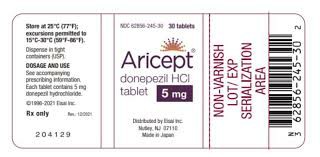
However, donepezil also has certain potential disadvantages and limitations. First of all, its efficacy is limited, mainly focusing on short-term improvement of cognitive function or delaying deterioration. It has no obvious effect on patients with severe AD in the late stage of the disease, and it is difficult to reverse the severe cognitive impairment and neurological damage that have already occurred. Secondly, donepezil may cause adverse reactions or interact with concomitant medications in some patients. For example, patients with heart disease need to monitor heart rate changes when using it, and long-term use may increase the risk of gastrointestinal discomfort. In addition, drug treatment can only improve symptoms but cannot prevent pathological processes, such as β-amyloid deposition or neurofibrillary tangle formation. Therefore, it is still necessary to combine non-pharmacological interventions such as cognitive training, lifestyle management and care support to achieve comprehensive management effects.
In actual clinical application, the use of donepezil needs to be combined with individualized evaluation. Doctors should select an appropriate dose and make dynamic adjustments based on the patient's age, cognitive function level, concurrent diseases, and concomitant medications. For example, for patients with mild to moderate AD, the initial dose is usually 5 mg once daily, which can be increased to 10 mg after several weeks of tolerance for optimal efficacy. At the same time, regular assessment of cognitive function and adverse reactions, dose adjustment or consideration of combination with other treatment measures are the key to ensuring long-term efficacy and safety.
Taken together, donepezil, as an acetylcholinesterase inhibitor, has significant advantages in improving cognitive function, delaying disease progression, and improving quality of life in patients with mild to moderate Alzheimer's disease. Its oral convenience, good tolerance, and controllable safety profile for long-term use make it the drug of choice for clinical use. However, the efficacy of the drug is limited, mainly focusing on symptom improvement, and the effect is not good in patients with advanced disease. At the same time, attention should be paid to cardiovascular and gastrointestinal adverse reactions. Clinically, donepezil should be used rationally in combination with individualized assessment and comprehensive management strategies to maximize its clinical value, and at the same time combined with non-drug interventions to provide patients with a comprehensive and scientific treatment plan.
Reference link:https://www.drugs.com
[ 免责声明 ] 本页面内容来自公开渠道(如FDA官网、Drugs官网、原研药厂官网等),仅供持有医疗专业资质的人员用于医学药学研究参考,不构成任何治疗建议或药品推荐。所涉药品可能未在中国大陆获批上市,不适用于中国境内销售和使用。如需治疗,请咨询正规医疗机构。本站不提供药品销售或代购服务。


