
.jpeg)
What are the main functions and effects of 0.01% atropine sulfate eye drops (EIKANCE)
0.01% Atropine Sulfate Eye Drops (EIKANCE) is a low-concentration atropine ophthalmic preparation, mainly used for the management of myopia in children and adolescents. As the prevalence of myopia continues to increase globally, especially among children in East Asia, the accelerated rate of myopia progression has become a focus of public health and clinical ophthalmology. The research and development goal of EIKANCE is to slow down the elongation of the axial length of the eye through drug intervention, thereby delaying the progression of myopia and ensuring the long-term visual health of children.
The main mechanism of action of the drug is the mild inhibition of the ciliary muscle of the eyeball by atropine. The adjustment activity of the ciliary muscle directly affects the axial length and refractive status of the eye, and low-concentration atropine eye drops can reduce the adjustment pressure of the eyeball for close use and reduce the risk of excessive elongation of the axial length. Compared with traditional high-concentration atropine, 0.01% concentration can not only inhibit the progression of myopia, but also minimize adverse reactions such as eye astigmatism, pupil dilation, and impact on the ability to adjust close distances.
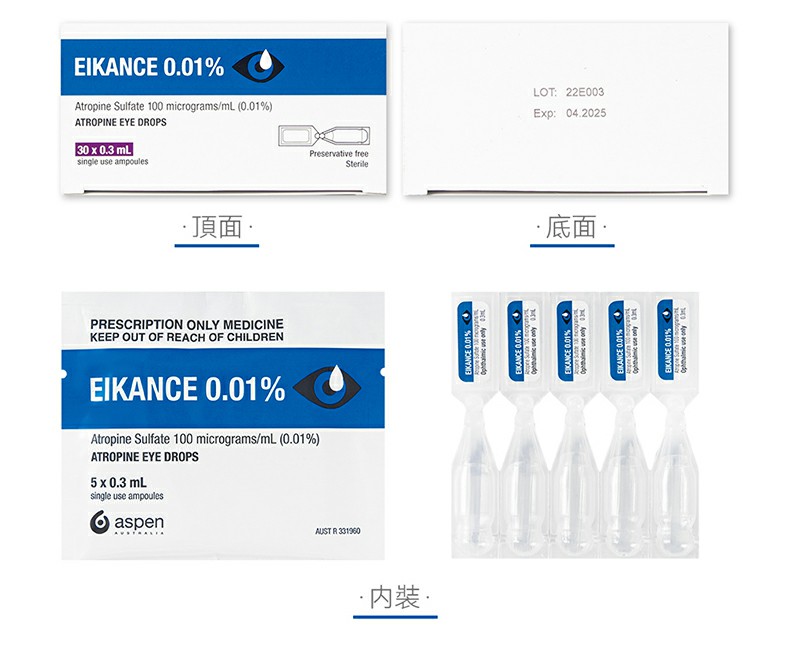
Clinical practice and overseas research have shown that long-term regular use0.01% atropine eye drops can effectively slow down the development of myopia in children. This effect is not to directly "restore" existing myopia, but to delay the elongation of the axial length of the eye so that the refractive power of the eye remains relatively stable during the natural increase over time, thereby reducing the risk of high myopia and its related complications. High myopia is often accompanied by an increased risk of retinal breaks, macular degeneration, and glaucoma, so early intervention is important.
Additionally, the use of low-concentration atropine eye drops has been shown to have less impact on visual function and quality of life. Compared with high-concentration preparations, EIKANCE has milder adverse reactions in terms of night vision and glare, and the impact on patients' daily activities and study life is limited. This makes the drug more acceptable for long-term medication management in children and helps improve medication compliance, thereby enhancing overall efficacy.
It is worth noting that drug efficacy is closely related to medication compliance. 0.01% atropine sulfate eye drops usually require regular daily instillation, and regular follow-up with an ophthalmologist, including vision examination and axial length measurement, so that the treatment plan can be adjusted according to individual differences. Overseas clinical guidelines recommend combining lifestyle interventions, such as increasing the time for outdoor activities and reducing the time for continuous close eye use. These measures can work synergistically with medications to achieve a more ideal myopia control effect.
In general,0.01% Atropine Sulfate Eye Drops (EIKANCE) is a low-concentration intervention drug targeting the risk of myopia progression in children and adolescents. Its main effect is to delay the elongation of the eye axis, slow down the increase in refractive power, and reduce the risk of high myopia and related complications. As a precision ophthalmic intervention method, this drug combined with scientific lifestyle management provides an important clinical tool for myopia prevention and control, and occupies an increasingly important position in global myopia management strategies.
Reference materials:https://www.eikance.com.au/
[ 免责声明 ] 本页面内容来自公开渠道(如FDA官网、Drugs官网、原研药厂官网等),仅供持有医疗专业资质的人员用于医学药学研究参考,不构成任何治疗建议或药品推荐。所涉药品可能未在中国大陆获批上市,不适用于中国境内销售和使用。如需治疗,请咨询正规医疗机构。本站不提供药品销售或代购服务。


