
.jpeg)
The effect of fenelidone (Keshenda) in the treatment of kidney disease and the interpretation of clinical experimental data
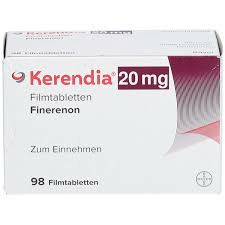
Finerenone (Finerenone) is a new type of selective mineral corticoid receptor antagonist (MRA), mainly used for the treatment of patients with chronic kidney disease (CKD) combined with type 2 diabetes (T2DM). Compared with traditional MRA such as spironolactone and eplerenone, fenelinone has obvious advantages in selectivity and safety, especially showing good efficacy in reducing cardiorenal events and controlling proteinuria. The following is a detailed explanation from four aspects: pharmacological mechanism, clinical trial data, efficacy interpretation and safety analysis.
1. Pharmacological mechanism and action characteristics
Fenelinone inhibits the activity of mineralocorticoid receptor (MR) with high selectivity and blocks its excessive activation in glomeruli, renal tubules and cardiovascular tissues, thereby reducing fibrosis and inflammatory responses. In patients with CKD, overactivation of MR can cause increased proteinuria, glomerulosclerosis, and decreased renal function. By reducing the release of inflammatory mediators and fibrotic factors, fenelidone not only effectively controls proteinuria, but also delays the deterioration of renal function. At the same time, because it has less impact on serum potassium, compared with traditional spironolactone drugs, its low risk is more suitable for long-term use.
2. Key clinical trials and data interpretation
The efficacy and safety of fenelinone mainly come from two multi-center, randomized, double-blind, placebo-controlled Phase III clinical trials of FIDELIO-DKD and FIGARO-DKD. FIDELIO-DKDThe study included CKD combined T2DM and eGFR was 25–75 mL/min/1.73㎡, urine protein/creatinine ratio (UACR) 30–5000 mg/g. The trial results showed that after a median follow-up of 2.6 years, the fenelidone group reduced the risk of composite renal endpoints (including worsening of renal function ≥40%, renal failure or kidney-related death) by 18%, with a statistically significant difference compared with placebo (HR 0.82, 95%CI 0.73–0.93, P<0.001). In addition, fenelidone has a significant inhibitory effect on proteinuria, with the average UACR decreasing by approximately 31%, suggesting that it has clinical significance in delaying the progression of kidney damage.
The FIGARO-DKD trial further verified the value of fenelidone in cardiovascular protection. Including patients with mild to moderate CKD, the results showed that fenelinone significantly reduced the incidence of major cardiovascular events (MACE), including cardiovascular death, heart failure hospitalization and non-fatal myocardial infarction, with a risk reduction of 14% (HR 0.86, 95%CI 0.75–0.99). Joint analysis showed that fenelidone has a protective effect on both cardiorenal events, especially in patients with high proteinuria and moderate renal insufficiency. This shows that fenelinone can not only delay the decline of renal function in patients with diabetic nephropathy, but also reduce cardiovascular risk and provide comprehensive clinical protection.
3. Clinical significance and application interpretation of efficacy
From the perspective of clinical application, the efficacy of fenelidone has multiple significance: first, it can effectively reduce proteinuria, delay the deterioration of renal function, and provide new treatment options for high-risk CKD patients. treatment method; secondly, its protective effect on cardiovascular events makes it an important drug for comprehensive cardiorenal management; thirdly, compared with spironolactone drugs, fenelidone performs better in controlling the risk of elevated blood potassium, reducing the risk of acute hyperkalemia in patients during medication. In summary, fenelidone provides a safe, effective, and long-term feasible treatment strategy in patients with CKD and T2DM.
4. Safety and Adverse Event Management
Common adverse events of fenelidone mainly include elevated serum potassium, hypertension and mild to moderate hypotension. FIDELIO-DKDThe data showed that the serum potassium in the fenelidone group was ≥5.5 The incidence rate of mmol/L was 18.3% and that in the placebo group was 9%, but most patients had mild to moderate symptoms and could be controlled through regular monitoring and medication adjustment. The incidence of severe hyperkalemia (≥6.0 mmol/L) is less than 1%. In addition, fenelidone has less impact on liver function, mild gastrointestinal reactions, and is generally well tolerated. In clinical practice, it is recommended to evaluate renal function and serum potassium levels before treatment and monitor them regularly so that dosage can be adjusted or potassium control measures can be taken in a timely manner.
Overall, fenelidone, as a newMRA, has significant renal protection and cardiovascular risk reduction effects in patients with chronic kidney disease and diabetes. Its effects on improving proteinuria, delaying renal function, and reducing cardiovascular events in clinical trials make it an important treatment option for patients with diabetic nephropathy. At the same time, the relatively low risk of serum potassium elevation and good tolerance provide guarantee for long-term application. As more clinical experience accumulates, fenelidone is expected to play a broader role in comprehensive cardiorenal management and bring more comprehensive therapeutic benefits to high-risk CKD patients.
Reference link:https://www.drugs.com
[ 免责声明 ] 本页面内容来自公开渠道(如FDA官网、Drugs官网、原研药厂官网等),仅供持有医疗专业资质的人员用于医学药学研究参考,不构成任何治疗建议或药品推荐。所涉药品可能未在中国大陆获批上市,不适用于中国境内销售和使用。如需治疗,请咨询正规医疗机构。本站不提供药品销售或代购服务。


