
.jpeg)
Does Mitotane belong to the category of targeted drugs?
Mitotane is a synthetic compound that is currently recognized by international clinical guidelines as the only dedicated drug for the treatment of adrenocortical cancer (Adrenocortical Carcinoma, ACC; adrenal cancer). It was not originally developed with the intention of anti-tumor, but in subsequent studies it was gradually discovered that it has a selective toxic effect on adrenocortical cells, so it was included in the field of cancer treatment. As for whether it is a "targeted drug", it needs to be analyzed from the definition and mechanism of action of the drug.
In modern oncology, targeted drugs usually refer to drugs that can precisely intervene on specific molecules, gene mutations or signaling pathways, such asEGFR inhibitors, VEGF inhibitors or PARP inhibitors. The characteristic of this type of drug is that it inhibits the growth, invasion and metastasis of tumor cells through specific molecular targets, thereby achieving "directed attack". So, does mitotane meet this criteria?
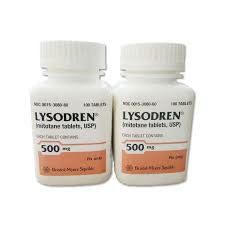
The mechanism of action of mitotane has not been fully elucidated, but there is evidence that it is mainly concentrated in the adrenal cortex tissue and can destroy the mitochondrial function and related enzyme activity of adrenal cells, thereby inhibiting the synthesis of steroid hormones. This selective destruction makes mitotane have certain tissue specificity for adrenal tumors. Because of this, some scholars classify it into the category of "functional targeted therapy". However, compared with small molecule targeted drugs precisely designed at the molecular level, mitotane's effect is closer to that of an "organ-specific toxic drug", and its target is not a clear single gene or signaling pathway.
It is worth noting that mitotane is not only used clinically for advanced or inoperable adrenocortical cancer, but is also often used as postoperative adjuvant therapy to reduce the risk of recurrence. Its clinical application further highlights its core position in the treatment ofACC. Although its use is not determined by precise genetic testing like modern molecular targeted drugs, in adrenal cancer, a rare tumor, mitotane is almost the only systemic treatment option that has been proven effective for a long time.
From an academic perspective, targeted drugs in the strict sense are drug designs based on clear molecular targets, while mitotane research emphasizes tissue selectivity and physiological function intervention. Therefore, mitotane is called a "quasi-targeted drug" by some researchers, but it cannot be completely equated with today's mainstream molecular targeted drugs. What makes it unique is its high affinity for adrenal tissue and its irreplaceability in certain malignancies.
Currently, the world is exploring more and moreIt is hoped that more precise targeted drugs can be developed for the molecular pathways related to ACC. However, no new drug has yet completely replaced mitotane in this area. For patients, mitotane remains the most critical cornerstone of treatment. In clinical practice, doctors will formulate an individualized mitotane treatment plan based on the patient's disease stage, tumor characteristics and tolerance, and balance efficacy and safety through blood concentration monitoring.
Reference materials:https://go.drugbank.com/drugs/DB00648
[ 免责声明 ] 本页面内容来自公开渠道(如FDA官网、Drugs官网、原研药厂官网等),仅供持有医疗专业资质的人员用于医学药学研究参考,不构成任何治疗建议或药品推荐。所涉药品可能未在中国大陆获批上市,不适用于中国境内销售和使用。如需治疗,请咨询正规医疗机构。本站不提供药品销售或代购服务。


