
.jpeg)
Comparative Analysis on Indications and Efficacy of Capmatinib (Touradida) and Savotinib
Capmatinib (Capmatinib) and Savolitinib (Savolitinib) are both MET inhibitors. In recent years, they have received widespread attention in the field of targeted treatment of non-small cell lung cancer (NSCLC). What they have in common is that they mainly target carrying METexon14 skipping mutation (METex14 skipping mutation) or MET amplification. These patients have relatively limited treatment options when conventional chemotherapy or common targets such as EGFR and ALK are negative. This article will compare and analyze capmatinib and sarvotinib from the perspectives of indications, clinical efficacy, safety characteristics and future application prospects.
1. Comparison of scope of indications
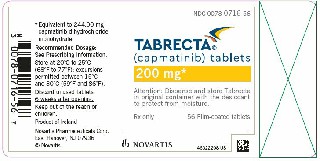
Capmatinib is the world's first MET inhibitor approved for the treatment of metastatic non-small cell lung cancer harboring METex14 mutations. The U.S. Food and Drug Administration (FDA) accelerated its approval for marketing in May 2020, and is suitable for adult patients with the mutation confirmed by molecular testing. Its indications are precise and its targets are clear, and it has become the first-line treatment option for relevant patients in Europe, the United States and some countries.
Savotinib is an oral selective MET inhibitor jointly developed by AstraZeneca and Hutchison Whampoa. It was the first to be approved in China. It is also indicated for patients with locally advanced or metastatic non-small cell lung cancer with METex14 mutations. Unlike capmatinib, saivotinib was approved for marketing in China earlier and became the first MET inhibitor approved in China. This provides new treatment options for domestic patients and reflects China's breakthrough in the development and marketing of targeted drugs.
2. Comparison of clinical efficacy
The efficacy of capmatinib is mainly based on the GEOMETRY mono-1 study. The results of this study show that the overall response rate (ORR) of untreated patients with METex14 mutations reached 68%, the median progression-free survival (PFS) was 12.4 months; while previously treated patientsORR was 41% and the median PFS was 5.4 months. This data fully demonstrates that capmatinib has significant advantages in first-line treatment, especially for patients who have not received systemic treatment.
The key clinical studies of saivotinib areNCT02897479 etc. The results of the study in the Chinese patient population showed that patients with advanced NSCLC with METex14 mutations who received sarvotinib had an overall good response rate. The resolution rate is approximately 49%, and the median PFS is approximately 6.9 months. Compared with capmatinib, saivotinib is slightly inferior in ORR and PFS, but it is still widely used because it was first launched in China and has good safety management experience.
From the perspective of objective efficacy comparison, capmatinib performs more prominently in untreated patients, while the data of saivotinib in patients who have received treatment or in local Chinese patients are more mature. Overall, both were significantly better than traditional chemotherapy and brought survival benefits to patients with MET mutation-related NSCLC.
3. Safety and Tolerability
Capmatinib and servotinib have some similarities in terms of safety. Common adverse reactions include edema, nausea, vomiting, fatigue, loss of appetite, etc. The study data of capmatinib show that most adverse reactions are grade 1-2 and can be managed through dose adjustment or supportive treatment. Serious adverse events such as interstitial lung disease and liver function abnormalities are relatively rare but require clinical monitoring.
The main adverse reactions of saivotinib are peripheral edema, elevated transaminases, and proteinuria. In some studies, the incidence of edema and gastrointestinal discomfort was higher with saivotinib than with capmatinib, but was generally controllable. For patients with weak liver and kidney function, clinicians will be more careful in selecting and adjusting doses.
4. Future development and clinical prospects
Although capmatinib and servotinib have both achieved breakthroughs in the treatment of METmutated NSCLC, several challenges remain. For example, patients may develop acquired resistance after taking the drug for a period of time, leading to disease progression. Current research focuses include combination treatment strategies, such as with immunotherapy, chemotherapy, or other targeted agents, to prolong clinical benefit for patients.
In addition, capmatinib has expanded rapidly in the international market, while saivotinib has accumulated a large amount of real-world application data by virtue of its priority approval in China. In the future, the two may form differentiated developments globally: capmatinib is more suitable for promotion in first-line treatment, while saivotinib may maintain a greater advantage in Asia, especially the Chinese market. At the same time, a new generation of more potent and selective MET inhibitors are also being developed, which may further change the existing treatment landscape in the future.
In general, capmatinib and servotinib, as representatives of MET inhibitors, have highly overlapping indications and are mainly targeted at patients with non-small cell lung cancer with METex14 mutations. In terms of efficacy, capmatinib performs better in first-line treatment, while saivotinib has richer clinical experience and accessibility in the Chinese patient population. There is little difference in safety between the two, and adverse reactions need to be monitored and reasonably managed. With the deepening of research and the development of combination drug strategies, these two drugs are expected to bring more lasting survival benefits to more patients in the future.
Reference link:https://www.drugs.com
[ 免责声明 ] 本页面内容来自公开渠道(如FDA官网、Drugs官网、原研药厂官网等),仅供持有医疗专业资质的人员用于医学药学研究参考,不构成任何治疗建议或药品推荐。所涉药品可能未在中国大陆获批上市,不适用于中国境内销售和使用。如需治疗,请咨询正规医疗机构。本站不提供药品销售或代购服务。


