
.jpeg)
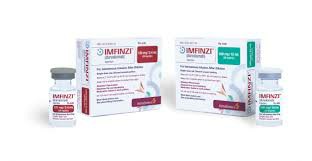
The content of the Chinese instruction manual for durvalumab/Infinifer
Durvalumab/Infinifer (Durvalumab) is an innovative immunotherapy drug that belongs to the class of programmed death ligand 1 (PD-L1) inhibitors, fully humanized monoclonal antibodies. As a new generation of immune checkpoint inhibitors, Durvalumab has shown significant efficacy in a variety of solid tumors, especially in the fields of non-small cell lung cancer (NSCLC), small cell lung cancer (SCLC), biliary tract cancer, hepatocellular carcinoma and endometrial cancer. The following will provide a detailed introduction to indications, side effects, usage, storage methods, mechanism of action, risk of overdose and contraindicated groups to help patients and medical staff fully understand the drug.
1. Who can use durvalumab? Indications
Durvalumab is suitable for the treatment of a variety of adult solid tumors. According to international and domestic guidelines, it mainly includes the following categories:
1. Non-small cell lung cancer (NSCLC)
1) Resectable NSCLC: After neoadjuvant treatment in combination with platinum-based chemotherapy, single-agent adjuvant treatment is continued after surgery. It is suitable for adult patients with tumors ≥4 cm or positive lymph nodes, and without known EGFR mutations or ALK rearrangements.
2) UnresectableStage III NSCLC: Patients whose disease has not progressed after receiving platinum-based chemotherapy and radiotherapy (cCRT) can be used as single-agent maintenance therapy.
3) MetastaticNSCLC: It can be combined with tremelimumab-actl and platinum-based chemotherapy to treat adult patients without EGFR/ALK sensitivity mutations.
2. Small cell lung cancer (SCLC)
1) Limited stage (LS-SCLC): After completing platinum-based chemotherapy and radiotherapy, it is used as a single drug for patients whose disease has not progressed.
2) Extensive stage (ES-SCLC): first-line treatment in combination with etoposide and carboplatin or cisplatin, followed by single-agent maintenance therapy.
3. Biliary tract cancer (BTC): combined with gemcitabine and cisplatin, for adult patients with locally advanced or metastatic biliary tract cancer.
4. Hepatocellular carcinoma (HCC): combined with temsitumumab for adult patients with unresectable hepatocellular carcinoma.
5. Endometrial cancer (dMMR type): After 6 cycles of combined carboplatin and paclitaxel chemotherapy, durvalumab can be used as single-agent maintenance therapy for patients with advanced or recurrent mismatch repair-deficient (dMMR) endometrial cancer.
2. What are the side effects of durvalumab?
As a PD-L1 inhibitor, the common side effects of durvalumab are mainly immune-related adverse reactions (irAEs), which can involve multiple organ systems:
Skin reactions: rash, itching, pigmentation changes, etc.
Digestive system: Diarrhea, enteritis, nausea or vomiting.
Endocrine system: thyroid dysfunction (hypothyroidism or hyperthyroidism), adrenal insufficiency, etc.
Liver: Elevated transaminase, hepatitis may occur.
Pulmonary: Immune pneumonia manifests as cough, shortness of breath, or hypoxemia.
Most side effects can be managed through early monitoring and intervention, and severe cases may require temporary discontinuation of the drug or treatment with glucocorticoids.
3. How to use durvalumab
Durvalumab is an intravenous infusion preparation and needs to be used under the guidance of a doctor. The infusion time after routine dilution should not be less than 60 minutes. The specific usage and dosage depend on the type of disease and the patient's weight:
1. NSCLC (resectable)
Weight≥30kg: Neoadjuvant treatment is 1500mg every 3 weeks, up to 4 cycles; postoperative adjuvant treatment is 1500mg every 4 weeks, up to 12 cycles.
Weight <30kg: 20mg/kg each time, the neoadjuvant and adjuvant treatment cycles are the same.
2. UnresectableStage III NSCLC
Weight≥30kg: 10mg/kg every 2 weeks or 1500mg every 4 weeks; weight <30kg: 10mg/kg every 2 weeks.
Treatment continues until disease progression or intolerable toxicity, up to 12 months.
3. SCLC and other tumors
According to the type of disease and combination plan, infusion is performed once every 3 or 4 weeks. For body weight ≥30kg, use 1500mg. For body weight <30kg, use 20mg/kg. Treat until the disease worsens or the toxicity is intolerable.
Specific plans need to be adjusted based on physician evaluation and clinical guidelines.
4. How to store durvalumab
Keep refrigerated at 2–8°C to avoid freezing. Avoid direct sunlight and keep original packaging. After dilution, it should be used within the specified time and avoid long-term storage.
5. How does durvalumab work?
Durvalumab specifically binds to PD-L1 on the surface of tumor cells and blocks its binding to the T cell PD-1 receptor. Under normal circumstances, PD-L1/PD-1 combination can inhibit T cell activity and help tumors evade immune surveillance. Immobilumab relieves this inhibitory signal and restores the function of T cells to recognize and kill tumor cells, thereby achieving anti-tumor effects.
6. What will happen if you overdose on imrvalumab?
Overdose may increase the risk of immune-related adverse reactions, such as severe rash, hepatitis, pneumonia, or endocrine disruption. Treatment methods include discontinuation of medication, symptomatic treatment, and use of glucocorticoids or immunosuppressants when necessary. Overdose patients should be closely monitored and managed under specialist guidance.
7. Who cannot use durvalumab
Patients with known hypersensitivity to durvalumab or any component of the formulation.
For patients with active severe autoimmune diseases (such as myasthenia gravis, active systemic lupus erythematosus, etc.), their condition may be aggravated due to immune activation.
People with infection or organ dysfunction should use it with caution and decide whether to use it under the evaluation of a doctor.
Reference materials:https://www.imfinzi.com/
[ 免责声明 ] 本页面内容来自公开渠道(如FDA官网、Drugs官网、原研药厂官网等),仅供持有医疗专业资质的人员用于医学药学研究参考,不构成任何治疗建议或药品推荐。所涉药品可能未在中国大陆获批上市,不适用于中国境内销售和使用。如需治疗,请咨询正规医疗机构。本站不提供药品销售或代购服务。


