
.jpeg)
The main efficacy and clinical effects of erdafitinib/BOC
Erdafitinib (Erdafitinib) is marketed in China under the trade name BALVERSA. It is a new oral small molecule targeted drug and is a fibroblast growth factor receptor (FGFR) inhibitor. The emergence of this type of drugs marks the continuous development of the field of precision tumor treatment in a more refined direction. Its main mechanism is to inhibit the FGFR signaling pathway, which plays a key role in the proliferation and survival of various tumor cells. Some cancer patients have FGFR gene mutations or fusions. Such molecular abnormalities are often closely related to tumor aggressiveness and drug resistance. Therefore, treatments targeting FGFR have gradually become a powerful tool to break through the bottleneck of traditional treatments.
The best-known indication for erdafitinib is advanced or recurrent urothelial carcinoma (bladder cancer). Patients with this type of cancer often have limited efficacy and poor prognosis after receiving traditional chemotherapy or immunotherapy. Studies have shown that when patients have FGFR2 or FGFR3 gene alterations, erdafitinib can significantly inhibit the growth and spread of tumors by blocking the signaling pathway. Relevant overseas data show that patients who use this drug perform well in terms of disease control rate, and some patients can achieve a relatively long-lasting stable disease. This is of great significance in the context of limited treatment options in the past.
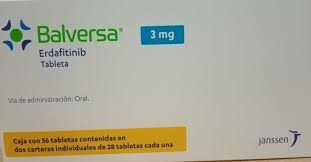
In addition to its breakthrough in urothelial cancer, the development and application of erdafitinib are continuing to expand. Currently, research worldwide is exploring its potential value in cholangiocarcinoma, breast cancer and some other solid tumors, especially those patients with FGFR gene abnormalities. This shows that erdafitinib is not only a treatment option for a single tumor, but is expected to become a new direction for precision treatment of multiple cancer types. In the future, as more real-world data and clinical trial results accumulate, its scope of indications may be further expanded to provide options for more patients.
In terms of clinical effects, erdafitinib, as an oral preparation, is more convenient to use and does not require frequent infusion treatment, which has obvious significance for improving the quality of life of patients. Compared with traditional chemotherapy, it is more targeted and can focus on cells with specific genetic abnormalities, thereby reducing damage to normal cells. This precision not only improves efficacy but also improves tolerability to a certain extent. However, similar to all targeted drugs, erdafitinib is not completely free of side effects. Patients may experience metabolism-related problems, eye adverse reactions, or skin and digestive tract discomfort during use. Therefore, clinical monitoring and supportive treatment are required to balance efficacy and safety.
Another advantage of erdafitinib is its flexibility in treatment strategies. When some patients develop resistance to immunotherapy or have poor chemotherapy effects, it can be used as a new treatment option to extend the patient's treatment sequence and avoid interrupting the treatment process due to lack of effective drugs. For doctors, it is important to reasonably select appropriate patient groups and screen them through genetic testingFGFR mutation is a prerequisite for its clinical value.
From the perspective of global treatment trends, the advent of erdafitinib represents the deepening of personalized medicine. With the gradual popularization of genetic testing in China, more and more patients can clearly understand their molecular classification, thereby accurately benefiting from this type of targeted drugs.
References:https://www.balversa.com/
[ 免责声明 ] 本页面内容来自公开渠道(如FDA官网、Drugs官网、原研药厂官网等),仅供持有医疗专业资质的人员用于医学药学研究参考,不构成任何治疗建议或药品推荐。所涉药品可能未在中国大陆获批上市,不适用于中国境内销售和使用。如需治疗,请咨询正规医疗机构。本站不提供药品销售或代购服务。


