
.jpeg)
What important information is included in the package insert for Enasidenib?
Enasidenib is a targeted therapy for patients with acute myeloid leukemia (AML) who have isocitrate dehydrogenase-2 (IDH2) mutations. Its English name is Enasidenib and it has important clinical application value. This article will conduct an in-depth discussion of the detailed instructions for ensidipine, mainly covering important information such as its indications, usage and dosage, side effects, and precautions.
First, ensidipine is indicated for the treatment of adult patients with relapsed or refractory acute myeloid leukemia who have IDH2 mutations. Acute myeloid leukemia is a severe hematological malignancy that usually manifests as a massive proliferation of immature white blood cells in the bone marrow, resulting in the suppression of normal blood cell production. IDH2 gene mutations are not uncommon in AML patients. Such mutations lead to metabolic abnormalities and promote the proliferation and survival of cancer cells. Therefore, targeted therapy for IDH2 mutations can bring new hope to patients.
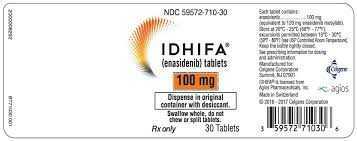
The recommended dose of ensidipine is100mg, taken orally once a day without food restrictions. This usage makes it easier for patients to follow in their daily lives and reduces medication complexity. During treatment, patients should continue for at least 6 months in order to observe the clinical response of the drug. During this period, doctors usually regularly evaluate the patient's progress and possible side effects in order to adjust the treatment plan in a timely manner.
When taking ensidipine, patients should be careful to swallow the tablets whole and do not chew, split or crush the tablets. This is because the drug's release mechanism may be affected, reducing efficacy or increasing the risk of side effects. In addition, patients are advised to take it at approximately the same time each day to help maintain stable drug concentrations in the body. If vomiting occurs or a dose is missed, the dose should be taken as soon as possible on the same day, but the normal schedule should be continued the next day.
Although ensidipine has shown good results in treating acute myeloid leukemia, it may also cause some side effects. Common side effects include abnormal liver function, leukopenia, thrombocytopenia, nausea, fatigue, etc. Therefore, during the treatment process, regular blood tests are very necessary to monitor the patient's blood routine indicators and liver function to ensure the safe use of the drug. If patients experience severe discomfort or abnormal reactions, they should communicate with their doctor in a timely manner to evaluate whether the medication regimen needs to be adjusted.
In addition, while using ensidipine, patients should also pay attention to their physical condition. Any sudden health problems, such as infection, bleeding, etc., should be taken seriously and seek medical treatment in time. In addition, during ensidipine treatment, patients should avoid contact with sources of infection, maintain good personal hygiene, and enhance their own immunity to reduce the risk of complications.
In short, ensidipine, as a targeted therapy, provides a new treatment option for patients with relapsed or refractory acute myeloid leukemia who have IDH2 mutations. Through rational medication regimens and close clinical monitoring, doctors can help patients maximize treatment effects and improve quality of life. In future research, scientists look forward to further revealing the mechanism of action of ensidipine, optimizing its application plan, and bringing benefits to more patients.
Reference materials:https://www.idhifa.com/
[ 免责声明 ] 本页面内容来自公开渠道(如FDA官网、Drugs官网、原研药厂官网等),仅供持有医疗专业资质的人员用于医学药学研究参考,不构成任何治疗建议或药品推荐。所涉药品可能未在中国大陆获批上市,不适用于中国境内销售和使用。如需治疗,请咨询正规医疗机构。本站不提供药品销售或代购服务。


