
.jpeg)
Comparison of the efficacy and side effects of Opicapone and entacapone
1. Overview of Drugs
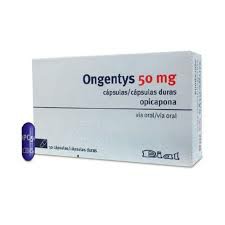
Opicapone (Opicapone) and entacapone (Entacapone) are both catechol-O- methyltransferase (COMT) inhibitors, used in patients with Parkinson's disease. On the basis of levodopa (L-DOPA) treatment, it extends the drug effect and reduces the "on-off" phenomenon. COMTInhibitors inhibit peripheral L-DOPA metabolism and increase its plasma half-life, thereby increasing dopamine levels in the brain, helping to improve motor symptoms and reduce motor fluctuations in advanced Parkinson's disease. Both are oral preparations, but there are differences in pharmacokinetics, dosage regimen and persistence of efficacy.
2. Comparison of efficacy
1.Symptom improvement and “on-off” time extension
Clinical studies have shown that taking Opicapone once a day can significantly extend the effective exercise time (ON-time) and reduce the ineffective exercise time (OFF-time). In most patients, the daily average ON-time is extended by approximately 1more than 1 hour. In contrast, entacapone needs to be taken multiple times a day with L-DOPA (usually in combination with L-DOPA each time), and its ON-time prolongation is generally slightly lower than that of Opicapone.
2.Drug efficacy persistence and compliance
Opicapone can maintain the inhibitory effect of COMT for 24 hours after being taken orally once. It has long-acting properties, so patients have higher compliance and reduce the risk of missing doses. Due to its short half-life, entacapone needs to be taken multiple times along with L-DOPA, which makes compliance and dose management difficult.
3.Comparison of clinical trial data
In multiple randomized controlled trials, Opicapone was effective in improving motor fluctuations, prolonging ON-time and reducing OFF-time in advanced Parkinson's diseaseThe performance is stable and the efficacy can be maintained even at low doses of levodopa. Although entacapone can improve motor symptoms, its ON-time extension and duration of efficacy are relatively short. Some patients need to increase the dose or frequency during long-term treatment to maintain the effect.
3. Comparison of side effects
1.Common adverse reactions
Common adverse reactions of both drugs include Nausea, vomiting, diarrhea, constipation, movement disorders (such as dyskinesia), insomnia and hallucinations. The overall incidence of adverse reactions of Opicapone is slightly lower, mainly mild to moderate gastrointestinal reactions, while entacapone requires multiple doses, and some patients may experience gastrointestinal discomfort and motor complications caused by drug accumulation.
2.Liver function and hematological effects
No obvious hepatotoxicity was found in either drug at normal doses, but Opicapone has a relatively low burden on the liver because of its once-daily dose and stable drug effect. Entacapone may increase the metabolic pressure on the liver when taken multiple times. Liver function needs to be monitored especially when other liver enzyme inhibitory or inducing drugs are used in combination.
3. Long-term safety
Due to its good compliance and stable dosage, long-term use of Opicapone shows controllable adverse reactions, and patients are less likely to suffer from severe movement disorders or blood pressure fluctuations. During long-term use of entacapone, some patients may develop limb dyskinesias or occasional cardiovascular reactions, which require regular follow-up and dose adjustment.
4. Clinical application and individualized selection
1. Convenience and compliance
Opicapone’s once-daily administration simplifies the patient’s medication regimen and is especially suitable for elderly patients or patients who require long-term self-management. Entacapone needs to be taken together with L-DOPA every time, and multiple administrations may increase the risk of missing a dose.
2.Individual differences in efficacy
Opicapone is more suitable for patients with obvious movement fluctuations and inconvenience in taking multiple medications; entacapone is suitable for patients with mild to moderate movement fluctuations or who have good multiple medication habits . Doctors should consider the severity of patient's motor symptoms, medication compliance, liver function status and past side effects experience when selecting.
3.Combination drug strategy
In complex cases, combined management with levodopa dose adjustment and other dopamine-enhancing drugs can be performed on an individual basis. Regardless of whether opicapone or entacapone is used, regular follow-up and symptom assessment are the keys to ensuring efficacy and safety.
Overall, opicapone is slightly better than entacapone in terms of sustainability of efficacy, compliance and controllability of side effects , and is especially suitable for patients with Parkinson's disease who need simplified medication regimens and long-term management. Although entacapone is slightly less effective, it is still suitable for some patients and can be optimized based on specific symptoms and combined medication. Clinically, the most appropriate COMT inhibitor should be selected based on the patient's individual situation, and treatment benefits should be maximized through regular follow-up, dose adjustment and side effect management.
Reference materials:https://www.drugs.com/
[ 免责声明 ] 本页面内容来自公开渠道(如FDA官网、Drugs官网、原研药厂官网等),仅供持有医疗专业资质的人员用于医学药学研究参考,不构成任何治疗建议或药品推荐。所涉药品可能未在中国大陆获批上市,不适用于中国境内销售和使用。如需治疗,请咨询正规医疗机构。本站不提供药品销售或代购服务。


