
.jpeg)
Evantumumab/Carestream combination significantly improves OS in Asian EGFR+ non-small cell lung cancer population
First-line evantumumab (amivantamab) plus lanlazertinib (Lazertinib) in the phase 3 MARIPOSA study (NCT0448708 0), the improved survival rate of Asian patients with locally advanced or metastatic non-small cell lung cancer (NSCLC) and carrying EGFR exon 19 deletions or L858R substitution mutations was clinically and statistically significant.
The treatment combination met the final prespecified secondary endpoint of overall survival (OS) compared with osimertinib (Tagrisso) monotherapy; median OS is expected to be more than 4 years, which is 1 year higher than osimertinib (Tagrisso). Notably, EGFR mutations are more common in patients from Asia compared with patients from other regions.
Across all patients, the median OS for the experimental combination could not be estimated (NE; 95% CI, 42.9-NE), whereas osimertinib< span> was 36.7 months (95% CI, 33.4-41.0) (HR, 0.75; 95% CI, 0.61-0.92; P=0.005). At 3 years, the OS rates were 60% (95%CI: 55%-64%) and 51% (95%CI: 46%-55%) respectively. Subgroup analysis of OS showed that the results of evantumumab combined with lanzutinib were favorable in Asians (HR, 0.75; 95% CI, 0.58-0.98) and non-Asians (HR (0.74; 95%CI), 0.54-1.00).
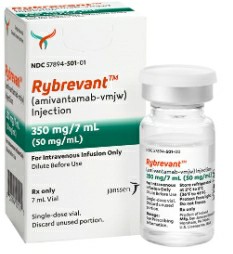
Previously, inAugust 2024, the U.S. Food and Drug Administration approved thecombination of evantumumab plus lanzetinibas a first-line treatment for the advanced NSCLC population with EGFR mutations. The combination is also approved in Japan, China, Australia, South Korea and Taiwan in Europe and Asia Pacific. All approvals are based on the results of MARIPOSA. EGFR-mutant NSCLC is more common in the Asia-Pacific region than in other regions, making the outcome of first treatment particularly important. They live longer.
MARIPOSA was a randomized trial evaluating evantumumab plus lanzutinib versus osimertinib monotherapyFirst-line efficacy in patients with EGFR-mutated NSCLC. A total of 1,074 patients were enrolled in the trial and randomly assigned in a 2:1:1 ratio to receive evantuzumab plus lanzutinib, osimertinib monotherapy, or lanzutinib monotherapy.
Patients received 1,050 mg of evantumumab intravenously weekly for the first 4 cycles, and patients weighing 80 kg or more received 1,400 mg intravenously, with an initial infusion divided into 2 days and then every 2 weeks starting in cycle 2. Lanzetinib is administered orally at a dose of 240 mg per day, and osimertinib is administered at a dose of 80 mg per day.
Eligible patients are 18 years of age or older and have previously received untreated EGFR-mutated locally advanced or metastatic NSCLC. Those who were asymptomatic or previously treated and had stable brain metastases were allowed to enter. The trial's primary endpoint is progression-free survival (PFS) according to RECIST v1.1 criteria, assessed by blinded independent central review. A key secondary endpoint is OS; other secondary endpoints are objective response rate, duration of response, intracranial PFS, and PFS2.
Regarding safety, evantumumab and lanzutinib showed a profile consistent with that previously observed in the preliminary analysis, with no new safety signals emerging at longer follow-up. At least one grade 3 or higher adverse event (AE) occurred in 80% of the combination treatment group and 52% of the osimertinib group. The most common grade 3 adverse events in the combination group were rash (17%), paronychia (12%), and acneiform dermatitis (9%).
Reference materials:https://www.cancernetwork.com/view/amivantamab-combo-significantly-improves-os-in-asian-egfr-nsclc-population
[ 免责声明 ] 本页面内容来自公开渠道(如FDA官网、Drugs官网、原研药厂官网等),仅供持有医疗专业资质的人员用于医学药学研究参考,不构成任何治疗建议或药品推荐。所涉药品可能未在中国大陆获批上市,不适用于中国境内销售和使用。如需治疗,请咨询正规医疗机构。本站不提供药品销售或代购服务。


