
.jpeg)
Comparative analysis of the efficacy of Selinisol (Silvio) and Bortezomib
1. Overview of Drugs
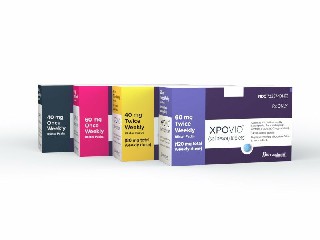
Selinexor is a Selective nuclear export inhibitor (SINE), by inhibiting nuclear export protein XPO1, causes tumor suppressor proteins (such as p53, p21) to accumulate in the nucleus, thereby inducing cancer cell apoptosis. It is mainly used to treat relapsed or refractory multiple myeloma (RRMM), especially for patients who are resistant to multiple drugs.
Bortezomib (Bortezomib) is a classic proteasome inhibitor that blocks the proteasome degradation pathway, leading to the accumulation of abnormal proteins in tumor cells and inducing stress response and apoptosis. Bortezomib is an important drug for the first-line and relapse treatment of multiple myeloma, with clear efficacy and long-term use experience.
The mechanisms of the two are different. One belongs to nuclear export inhibition and the other belongs to proteasome inhibition. They are commonly used clinically for patients with different drug resistance backgrounds and treatment stages.
2. Comparison of efficacy: objective response rate (ORR)
In relapsed or refractory multiple myeloma, the efficacy of selinesol as a single agent is relatively limited. Clinical trials show that the objective response rate (ORR) is about 25%-30%, but when combined with dexamethasone, the ORR can be improved to ORR 40%-50%. For patients who are resistant to bortezomib and lenalidomide, selinesol can still induce partial tumor responses and provide an additional treatment option.
As a proteasome inhibitor, Bortezomib has a higher ORR. When treated with RRMM as a single agent, ORR can reach 30%-40%, and combined with dexamethasone or other drugs (such as lenalidomide) can exceed 60%-70%. In patients who are treated early or have low drug resistance, the efficacy is more significant, and some patients can achieve complete remission (CR) or deep partial remission (VGPR).
Overall, bortezomib is more effective than selinexole in patients with standard relapsed//span>refractory myeloma, but selinexole still has unique value in patients with multidrug resistance or special resistance.
3. Duration of efficacy and survival period
The median progression-free survival (PFS) of selinesol combination therapy is about 4-6 months, and the median overall survival (OS) is about OS 10-15 months, survival can still be prolonged in patients with multidrug resistance. The effect appears quickly, but tolerance issues may affect the continuous medication time.
The efficacy of bortezomib lasts longer, and the combination regimen can achieve median PFS of 9-12 months, and OS of more than 20 months. We have rich experience in long-term maintenance treatment, and patients with relapse can prolong the curative effect through dose adjustment or combination with other drugs.
Therefore, from the perspective of persistence of efficacy and survival benefit, bortezomib is more suitable for conventional treatment, while selinesol is more suitable as rescue treatment for drug-resistant or refractory patients.
4. Clinical application and drug resistance background analysis
In clinical practice, selinesol is commonly used in RRMM resistant to bortezomib, lenalidomide and dexamethasoneRRMMpatients, or as a third-line and above treatment option. Although the efficacy is not as significant as that of bortezomib, it can cover the drug-resistant population and is an important treatment option for patients with multi-drug resistance.
Bortezomib is widely used in first-line or relapse treatment. It can be used in combination with dexamethasone, lenalidomide, ixazomib or other targeted drugs. It has significant efficacy and high depth of remission. For patients with drug resistance or relapse, the efficacy can be continued through dosage adjustment, dosing interval extension, or combination with new drugs .
In general, both have their own advantages in efficacy: bortezomib is suitable for standard treatment and patients with early relapse, with high efficacy and long duration; selinesol is mainly targeted at patients with multi-drug resistance and severe relapse, providing additional opportunities for relief and is an important supplementary method for the treatment of myeloma.
Reference materials:https://www.drugs.com/
[ 免责声明 ] 本页面内容来自公开渠道(如FDA官网、Drugs官网、原研药厂官网等),仅供持有医疗专业资质的人员用于医学药学研究参考,不构成任何治疗建议或药品推荐。所涉药品可能未在中国大陆获批上市,不适用于中国境内销售和使用。如需治疗,请咨询正规医疗机构。本站不提供药品销售或代购服务。


