
.jpeg)
Full text analysis of Erdafitinib/Bocco drug instructions
1. Drug name
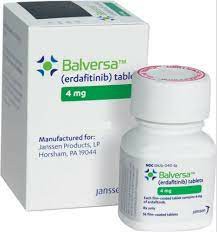
Erdafitinib (Erdafitinib), whose trade names include Balversa and Boco used in the domestic market, is an oral small molecule targeted drug that belongs to the kinase inhibitor class. As an important drug in the field of precision tumor treatment in recent years, it is mainly targeted at patients with bladder cancer carrying FGFR gene abnormalities, providing treatment options for specific molecular subtypes.
2. Indications
Erdafitinib is indicated for the treatment of adult patients with locally advanced or metastatic urothelial carcinoma (mUC; bladder cancer ) if the patient's tumor has FGFR2 or FGFR3 gene alterations. Patients were required to have had at least one prior round of platinum-based chemotherapy and have disease progression during or after treatment, or to have disease progression within 12 months of neoadjuvant/adjuvant platinum-based chemotherapy. Confirmation of the presence of susceptible FGFR mutations or fusions through genetic testing is a prerequisite for initiating erdafitinib treatment.
3. Usage and dosage
1. Preparation before medication: Doctors need to determine whether the tumor carries susceptibilityFGFR gene changes based on companion diagnostics. Only patients who meet the conditions can initiate treatment. Genetic testing ensures the accuracy of drugs while maximizing efficacy.
2. Recommended dose: The standard recommended dose is 8mg taken orally once daily, which can be divided into two 4mg tablets. The dose may be increased to 9 mg (three 3 mg tablets) once daily 14 to 21 days after initiation of treatment, based on serum phosphate levels and tolerance. Treatment should be continued until disease progression or unacceptable toxicity occurs.
3. Dosage adjustment:
1)Serum phosphate monitoring: Assess serum phosphate levels from 14 to 21 days after treatment. If <5.5 mg/dL and no serious eye or other grade 2 or above adverse reactions occur, the dose can be increased to 9 mg/day. Serum phosphorus needs to be continuously monitored monthly during treatment to prevent hyperphosphatemia.
2) Adverse reaction adjustment: If adverse reactions occur, the dose needs to be reduced in stages according to the severity. For example, the starting dose of 8mg/day can be gradually reduced to 6mg, 5mg or 4mg; the starting dose of 9mg/day can be gradually reduced to 8mg, 6mg, 5mg or 4mg. If the patient cannot tolerate the lowest dose of 4 mg/day, treatment needs to be discontinued.
4. Adverse reactions
Erdafitinib has a broad spectrum of adverse effects, but most can be managed through dose adjustment and monitoring. Common adverse reactions include stomatitis, fatigue, diarrhea, dry mouth, nail abnormalities, decreased appetite, dysgeusia, dry skin, dry eyes, hair loss, palmar and plantar redness and abnormal sensation, constipation, abdominal pain, nausea, and musculoskeletal pain. Laboratory abnormalities may manifest as elevated serum phosphate, elevated creatinine, elevated liver enzymes, decreased sodium, decreased hemoglobin, and fluctuations in calcium, magnesium, and phosphorus levels.
5. Storage conditions
Erdafitinib is available as tablets and should be stored at **20–25°C (68–77°F)**, with an acceptable temperature deviation of 15–30°C (59–86°F). Storage should be protected from light and moisture, and placed out of reach of children to ensure drug stability and safety.
6. Mechanism of action
Erdafitinib is a small molecule kinase inhibitor that can inhibit the enzyme activities of FGFR1, FGFR2, FGFR3, and FGFR4. It also has certain inhibitory effects on kinases such as RET, CSF1R, PDGFRA, PDGFRB, FLT4, KIT, and VEGFR2. It inhibits the proliferation and survival of cells carrying FGFR gene changes (mutation, amplification or fusion) by blocking FGFR signal transduction. In in vitro experiments and animal xenograft models, erdafitinib has shown significant anti-tumor activity, especially against FGFR-expressing tumors such as bladder cancer. Its targeting mechanism allows the drug to accurately target molecularly abnormal tumors with both efficacy and safety.
Reference materials:https://www.balversa.com/
[ 免责声明 ] 本页面内容来自公开渠道(如FDA官网、Drugs官网、原研药厂官网等),仅供持有医疗专业资质的人员用于医学药学研究参考,不构成任何治疗建议或药品推荐。所涉药品可能未在中国大陆获批上市,不适用于中国境内销售和使用。如需治疗,请咨询正规医疗机构。本站不提供药品销售或代购服务。


