
.jpeg)
Detailed labeling guide for Evantumumab/Carestream
1. Basic information about drugs
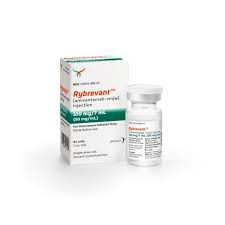
Amivantamab (amivantamab), trade name RYBREVANT, also known as "Raida", is an injectable bispecific antibody drug. Its specification is 350mg/7mL sterile solution, which requires intravenous infusion. As a new drug that has developed rapidly in the treatment field in recent years, it has become an important choice for the treatment of EGFR exon 20 insertion mutationsnon-small cell lung cancer (NSCLC).
2. Scope of indications
1. First-line treatment: It is suitable for patients with locally advanced or metastatic NSCLC carryingEGFR exon 20 insertion mutation. It can be used in combination with carboplatin and pemetrexed. This indication has been approved by the US FDA, providing a new standard treatment option for patients with related mutations.
2. Second-line or subsequent treatment: For adult patients with EGFR exon 20 insertion mutation NSCLC who have received platinum-based chemotherapy and have progressed, evantumumab can be used alone, making up for the limited efficacy of traditional targeted drugs in this mutation type.
3. Medication and dosing regimen
1. Preparation before treatment: Patients need to be diagnosed with tissue or blood samplesEGFR exon 20 insertion mutation. To reduce possible allergic or febrile reactions during the first infusion, antihistamines, antipyretics and glucocorticoids need to be used in advance. The conditioning regimen still needs to be maintained during subsequent treatments.
2. Dosage design:
1) During combined medication: For patients weighing <80Kg, 1,400 mg will be administered weekly for the first 4 weeks, and will be changed to 1,750 mg every 3 weeks from the 7th week; for patients weighing ≥ 80 Kg, 1,750 mg and 2,100 mg will be administered respectively.
2) During monotherapy: For patients weighing <80Kg, 1050mg per week for the first 5 weeks, fixed at 1050mg every 3 weeks from the 7th week; for patients weighing ≥80Kg, 1400mg.
If serious adverse reactions occur, doctors need to adjust or delay medication based on tolerance.
4. Common adverse reactions
In clinical trials and real-world data, the incidence of adverse reactions of evantumumab is high but mostly controllable:
Skin-related problems: Rashes, paronychia, dryness and itching are the most common.
Infusion-related reactions: Fever, chills, or respiratory symptoms may occur, especially during the first dose.
Other symptoms: include fatigue, nausea, dyspnea, edema, musculoskeletal pain and cough.
Abnormal laboratory tests: Fluctuations in electrolyte levels and liver function indicators also need to be closely monitored.
5. Storage and drug management
Evantumumab is an intravenous infusion solution that appears as a colorless to light yellow clear solution. It needs to be stored in a refrigerator at 2°C~8°C, protected from light, and freezing is prohibited to ensure drug stability. The drug is a prescription preparation and can only be used in medical institutions with tumor treatment qualifications.
6. Precautions for special groups of people
1. Pregnant and lactating women: Animal experiments suggest that the drug may affect embryonic development. Therefore, women of childbearing age need to take reliable contraceptive measures during treatment and three months after stopping the drug. Breastfeeding is not recommended.
2. Elderly people: Clinically, it can be administered at conventional doses, but attention should be paid to their underlying diseases and liver and kidney function.
3. Concomitant medication: If the patient uses immunosuppressants or anticoagulants for a long time, the risk of potential drug interactions should be evaluated by a doctor.
7. Mechanism of action and scientific value
Evantumumab is an EGFR/MET bispecific antibody. Its mechanism is mainly reflected in:
Block signaling pathways: By inhibiting the ligand binding between EGFR and MET, it blocks key signals for tumor cell proliferation and survival.
Promote receptor degradation: In the mutation model, it can induce the endocytosis and degradation of EGFR and MET, thus weakening the signal transduction ability of cancer cells.
Immune effect: activate antibody-dependent cellular cytotoxicity (ADCC) and macrophage-mediated phagocytosis, and enhance the body's immune system to clear tumors.
8. Clinical significance and prospects
EGFR exon 20 insertion mutations account for approximately 2% to 12% of EGFR mutant NSCLC. In the past, these patients lacked effective targeted therapies, and the efficacy was often inferior to common mutations (such as L858R, 19del). The launch of evantumumab brings new possibilities for personalized treatment to this group. As joint research with other targeted drugs and immunotherapy continues to unfold, its application fields are expected to be further expanded.
Reference materials:https://www.rybrevant.com/
[ 免责声明 ] 本页面内容来自公开渠道(如FDA官网、Drugs官网、原研药厂官网等),仅供持有医疗专业资质的人员用于医学药学研究参考,不构成任何治疗建议或药品推荐。所涉药品可能未在中国大陆获批上市,不适用于中国境内销售和使用。如需治疗,请咨询正规医疗机构。本站不提供药品销售或代购服务。


