
.jpeg)
What is the effect of Vandetanib on RET?
Vandetanib is a multi-target tyrosine kinase inhibitor, and its inhibitory effect on the RET receptor is the core mechanism for the treatment of medullary thyroid cancer (MTC; thyroid cancer). The RET receptor plays a key role in the occurrence and progression of MTC. Its activating mutations can lead to uncontrolled cell proliferation, enhanced anti-apoptosis ability and active tumor angiogenesis, ultimately promoting tumor growth and distant metastasis. Vandetanib directly inhibits RET kinase activity and blocks the downstream RAS-RAF-MEK-ERK and PI3K-AKT signaling pathways, thereby inhibiting tumor cell proliferation, inducing apoptosis, and slowing down tumor angiogenesis, providing systemic control for patients with advanced MTC.
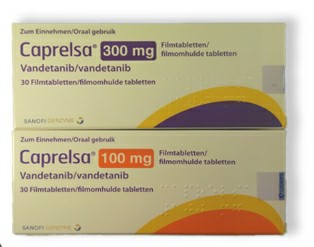
In vitro studies have shown that vandetanib can also inhibitEGFR, VEGFR family, BRK, TIE2, EPH receptor and Src kinase family members. This multi-target feature enables it to have multiple intervention effects in the anti-tumor process, not only inhibiting the tumor itself, but also affecting the tumor microenvironment and angiogenesis, thereby enhancing the therapeutic effect. The N-desmethyl metabolite of vandetanib accounts for approximately 7% to 17% of drug exposure and remains active on VEGFR and EGFR, helping to prolong the duration of drug efficacy.
In clinical application, RET gene detection is a key part of vandetanib treatment. For patients with RET mutations, vandetanib can significantly delay disease progression while improving symptoms such as pain control and biochemical abnormalities. The multi-target properties of the drug may also reduce the rate of tumor angiogenesis and inhibit the metastasis process, which is of great value to patients with locally advanced and metastatic MTC.
In addition, RET inhibition is also closely related to drug resistance management. Secondary mutations may affect the RET inhibitory effect, but vandetanib's multi-target intervention can delay the occurrence of drug resistance to a certain extent and provide patients with a longer clinical benefit period. Clinicians need to combine imaging, serum markers and genetic testing during use and dynamically adjust medication strategies to optimize efficacy and safety.
Reference materials:https://www.drugs.com/caprelsa.html
[ 免责声明 ] 本页面内容来自公开渠道(如FDA官网、Drugs官网、原研药厂官网等),仅供持有医疗专业资质的人员用于医学药学研究参考,不构成任何治疗建议或药品推荐。所涉药品可能未在中国大陆获批上市,不适用于中国境内销售和使用。如需治疗,请咨询正规医疗机构。本站不提供药品销售或代购服务。


