
.jpeg)
Analysis of the clinical efficacy of trametinib (Megenin) combined with dabrafenib in the treatment of melanoma
Trametinib is a MEK inhibitor, while dabrafenib is a BRAF inhibitor. Significant efficacy has been demonstrated in patients with V600mutated melanoma. Although a single BRAF inhibitor can quickly shrink tumors in clinical application, resistance usually appears in about half a year, and the efficacy is difficult to last. By combining trametinib, it can inhibit the downstream activity of the MAPK pathway, thereby delaying the occurrence of resistance mechanisms. A large number of clinical studies have shown that this combination regimen can effectively improve the progression-free survival and overall survival rate of patients, and has become one of the first-line standard treatment options recommended by international guidelines.
From the key clinical trial data, the COMBI-d and COMBI-v studies provide core evidence for the application of trametinib combined with dabrafenib in melanoma. The study results show that the median progression-free survival (PFS) of the combination treatment group reaches 11.0 to 11.4 months, while monotherapy is usually less than 7 months, and the clinical gap is obvious. At the same time, the overall response rate (ORR) of the combination regimen exceeded 60%, and some patients even achieved complete remission. More importantly, the combination of drugs significantly prolonged the median overall survival (OS) of patients, and some patients can still maintain stable disease for more than two years. These data fully demonstrate that the synergistic effect of trametinib and dabrafenib effectively overcomes the problem of rapid resistance to single drugs and brings more durable clinical benefits.
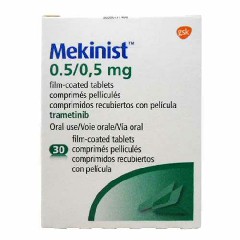
In terms of safety, the combined use of trametinib and dabrafenib has certain advantages over the single-agent regimen. Studies have shown that combined medication not only delays drug resistance, but also reduces the incidence of side effects related to BRAF inhibitors to a certain extent, such as the risk of cutaneous squamous cell carcinoma being significantly reduced. However, the combination regimen may still cause fever, rash, gastrointestinal reactions, and cardiac function-related adverse events. Fever is one of the most common side effects, and some patients require dose adjustments or brief drug discontinuation. In clinical practice, doctors usually adopt symptomatic treatment and dynamic monitoring based on the patient's individual situation to ensure that medication safety is taken into account while improving efficacy.
Taken together, the combined treatment regimen of trametinib and dabrafenib has becomeBRAF V600An important treatment option for mutant melanoma and highly recommended in international guidelines. This regimen not only improved objective response rates and survival, but also significantly improved patients' long-term disease control rates. This combination offers new treatment hope for patients with advanced melanoma, especially those who need rapid symptom relief and delayed drug resistance. In the future, with the accumulation of more real-world data and clinical studies, the combined application of trametinib and dabrafenib may be expanded to other BRAF mutation-related tumor areas, and combined with immunotherapy or other targeted drugs to further optimize the comprehensive treatment strategy for melanoma.
Reference materials:https://www.drugs.com/
[ 免责声明 ] 本页面内容来自公开渠道(如FDA官网、Drugs官网、原研药厂官网等),仅供持有医疗专业资质的人员用于医学药学研究参考,不构成任何治疗建议或药品推荐。所涉药品可能未在中国大陆获批上市,不适用于中国境内销售和使用。如需治疗,请咨询正规医疗机构。本站不提供药品销售或代购服务。


