
.jpeg)
Analysis of the differences and clinical applicable effects between ruxolitinib cream (Opzelura) and ruxolitinib tablets
Ruxolitinib cream (Opzelura) and ruxolitinib are both JAK inhibitors, but there are obvious differences in dosage forms, indications, mechanisms of action and clinical applications. This article will conduct a detailed analysis from four aspects: pharmacological mechanism, indications, clinical research data and practical application effects to help understand the characteristics and clinical value of the two.
Ruxolitinib cream is a topical JAK1/JAK2 inhibitor, mainly used to treat mild to moderate non-segmental vitiligo. Its mechanism of action blocks the damage of pro-inflammatory cytokines to melanocytes by locally inhibiting the JAK-STAT signaling pathway, thereby helping melanocytes restore their functions. The advantage of topical cream is that the drug acts directly on the lesion site, reducing systemic absorption and systemic side effects. It is especially suitable for patients with limited lesion range and relatively mild to moderate disease. Clinical trials have shown that after using ruxolitinib cream for 12 to 24 weeks, the repigmentation rate of white spots on the face and hands of patients was significantly improved and was well tolerated. The most common adverse reactions were local irritation, mild rash or itching. The safety of long-term use is relatively high, but regular follow-up is still required to evaluate efficacy and skin reactions.
In contrast, ruxolitinib is an oral JAK1 inhibitor mainly used to treat systemic diseases such as myelofibrosis, polycythemia vera, and graft-versus-host disease (GVHD). These diseases involve abnormalities in the hematopoietic or immune systems and require drugs to work throughout the body. Ruxolitinib regulates abnormal hematopoiesis and immune responses by inhibiting the over-activated JAK signaling pathway, thereby improving hematological indicators, relieving splenomegaly, and reducing systemic inflammation and symptoms. Clinical studies have shown that ruxolitinib can significantly reduce spleen volume, improve anemia and abnormal blood cell counts in patients with myelofibrosis and polycythemia vera; in patients with GVHD it can improve the overall response rate and relieve symptoms of skin, liver and gastrointestinal involvement. However, oral systemic medication also brings risks such as hematology, infection, and liver and kidney dysfunction, and regular monitoring of blood routine, liver function, and lipid levels is required.
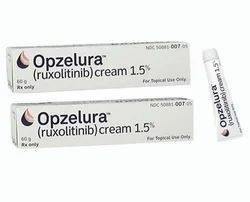
In terms of clinical application effect, ruxolitinib cream is more suitable for patients with localized or mild to moderate skin lesions. It can achieve better repigmentation or symptom improvement through topical application and has low systemic side effects. Ruxolitinib cream is suitable for patients with extensive lesions or obvious systemic inflammation. Symptom control can be achieved through oral systemic treatment, but the safety needs to be strictly monitored. Choosing which drug to use requires a comprehensive assessment based on the patient's condition, scope of lesions, previous treatment experience, and potential risks. Doctors usually prioritize the use of ruxolitinib cream in patients with localized lesions and poor tolerance to systemic medications, while patients with systemic lesions or moderate to severe inflammation are more suitable for ruxolitinib.
To sum up, ruxolitinib cream and ruxolitinib are the most effective in JAKEach inhibitor field has its own advantages. Ruxolitinib cream is characterized by high local efficacy and low systemic side effects, and is suitable for patients with localized skin lesions; ruxolitinib has the advantages of systemic broad-spectrum anti-inflammatory effects and improvement of hematological abnormalities, and is suitable for patients with bone marrow system or immune-mediated systemic diseases. Although both inhibit the JAK signaling pathway in terms of mechanism of action, they achieve precise treatments for different diseases and conditions through differences in dosage forms, indications and medication methods. In the future, with the accumulation of more clinical studies and real-world data, the application of these two drugs in personalized treatment strategies will be clearer, providing effective and safe medication options for different patients.
Reference materials:https://www.drugs.com/
[ 免责声明 ] 本页面内容来自公开渠道(如FDA官网、Drugs官网、原研药厂官网等),仅供持有医疗专业资质的人员用于医学药学研究参考,不构成任何治疗建议或药品推荐。所涉药品可能未在中国大陆获批上市,不适用于中国境内销售和使用。如需治疗,请咨询正规医疗机构。本站不提供药品销售或代购服务。


