.jpeg)
Anagrelide Cautions and Contraindications: Allergy, Hepatic, Cardiac and Bleeding Risks
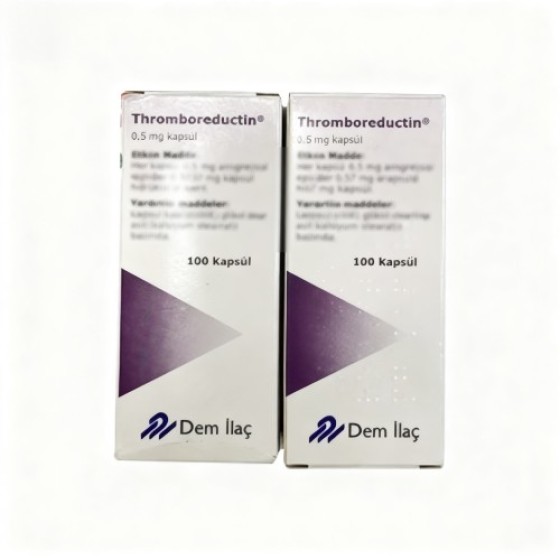
Anagrelide is a platelet-lowering agent mainly used for thrombocythemia related to myeloproliferative neoplasms.The safety boundary is not“ban everyone at risk,”but rather a stratified assessment based on allergy history,organ function,underlying disease,and concurrent medications.
Clearer contraindications
A history of severe hypersensitivity to anagrelide or excipients generally means the drug should not be reused.Severe hepatic impairment is also consistently treated as a contraindication or“avoid use”scenario in several labels,because drug exposure rises sharply.Mild-to-moderate hepatic dysfunction is not automatic disqualification,but requires risk-benefit evaluation,lower starting doses,and closer monitoring.
Cardiovascular risk must be checked first
Anagrelide can cause palpitations,tachycardia,QTc prolongation,ventricular arrhythmias,and congestive heart failure signals.Patients with prior heart failure,myocardial ischemia,serious arrhythmia,congenital long QT syndrome,or those taking QT-prolonging drugs and presenting electrolyte disturbances need baseline ECG,electrolytes,and cardiac assessment.Use is justified only when expected benefit clearly outweighs risk.
Bleeding risk depends on combination therapy
Concomitant use with aspirin,anticoagulants,antiplatelet agents,or NSAIDs increases the chance of major bleeding.People with prior gastrointestinal bleeding,coagulopathy,or platelet-function disorders need careful review of combination therapy and ongoing bleeding surveillance.
Pulmonary hypertension and pulmonary toxicity
Baseline and periodic evaluation for cardiopulmonary symptoms is recommended.Underlying heart-lung disease should be screened before initiation.New or progressive dyspnea,fatigue,or radiographic infiltrates warrants suspension and investigation.
Special physiological groups
Pregnancy is generally avoided unless a specialist determines that maternal benefit exceeds fetal risk.Breastfeeding is not recommended during therapy.Pediatric use has limited evidence and must be individualized by age,weight,and disease progression.Older adults often carry multimorbidity—cardiac disease,hepatic or renal decline—so tolerability depends on cautious titration and regular review.
Renal impairment:monitor,don’t assume ban
Renal dysfunction is not a blanket contraindication,but renal toxicity and exposure uncertainty mean creatinine,urine findings,and overall status should be tracked closely.
Core principle:anagrelide safety is managed through pre-treatment evaluation and continuous monitoring—platelets,ECG,liver and kidney function,electrolytes,bleeding signs,and cardiopulmonary symptoms—rather than simplistic labeling.
[ 免责声明 ] 本页面内容来自公开渠道(如FDA官网、Drugs官网、原研药厂官网等),仅供持有医疗专业资质的人员用于医学药学研究参考,不构成任何治疗建议或药品推荐。所涉药品可能未在中国大陆获批上市,不适用于中国境内销售和使用。如需治疗,请咨询正规医疗机构。本站不提供药品销售或代购服务。