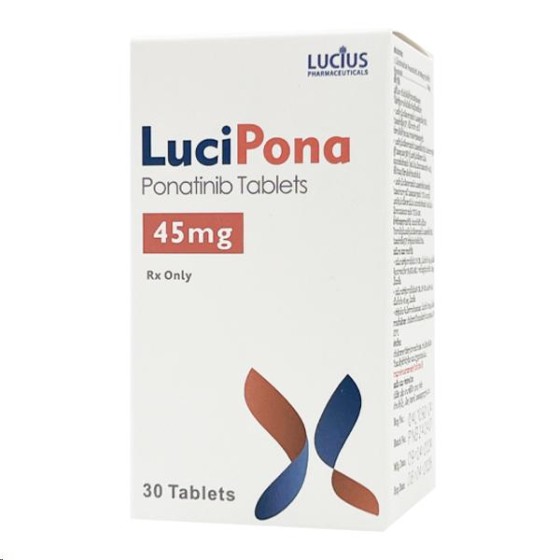
.jpeg)
Ponatinib vs. Olverembatinib: A Multidimensional Comparison of Third-Generation BCR-ABL Inhibitors
1.Target Coverage and Molecular Structure
Ponatinib is the first globally approved third-generation BCR-ABL tyrosine kinase inhibitor.Its distinctive carbon-carbon triple bond structure enables broad inhibitory activity against the BCR-ABL kinase domain,covering the vast majority of known resistance mutations including the T315I gatekeeper mutation.Olverembatinib,also a third-generation TKI,demonstrates potent inhibitory activity against both wild-type BCR-ABL and multiple mutations including T315I.While the two agents share substantial overlap in core target coverage,subtle differences exist in inhibitory potency against specific mutation subtypes.
2.Efficacy in Chronic Phase CML
In chronic phase CML(CP-CML),the PACE trial demonstrated that ponatinib achieved a major cytogenetic response rate of approximately 60%,a complete cytogenetic response rate of approximately 54%,and a major molecular response rate of approximately 40%.The PONDEROSA real-world study further confirmed that 58.6%of patients achieved or maintained major molecular response,with a 2-year overall survival rate of 85.7%.Olverembatinib demonstrated a major cytogenetic response rate of approximately 47.7%,a complete cytogenetic response rate of approximately 36.4%,and a major molecular response rate of approximately 27.3%in corresponding clinical studies.Overall,ponatinib shows more robust and numerically superior efficacy data in the chronic phase setting.
3.Treatment Position in Accelerated and Blast Phase
In CML accelerated phase and blast phase,ponatinib possesses more mature evidence-based data and is one of the few TKIs approved for blast phase CML and Philadelphia chromosome-positive acute lymphoblastic leukemia(Ph+ALL),providing clinical benefit even in heavily pretreated patients.Olverembatinib's data in accelerated phase is still accumulating;a recently published multicenter retrospective study has shown preliminary response activity in TKI-failed accelerated phase patients,but long-term follow-up evidence remains to be validated.
4.Cardiovascular Safety Differences
Cardiovascular toxicity is a critical concern in the clinical use of third-generation TKIs.Ponatinib is associated with a higher risk of arterial occlusive events(AOEs)during long-term use,including myocardial infarction,stroke,and peripheral arterial disease,with a serious cardiovascular event rate of approximately 12.1%in the PONDEROSA study.Preliminary safety data for olverembatinib suggest a potentially lower thrombotic event risk compared to ponatinib;however,large-scale,long-duration head-to-head comparative data are still lacking and continued monitoring is warranted.
5.Dosing Strategies and Long-Term Management
The standard starting dose of ponatinib is 45 mg once daily,which can be stepwise reduced to 30 mg or 15 mg upon achieving the desired therapeutic response to mitigate long-term toxicity.This dose-reduction strategy is important for balancing efficacy and safety.Olverembatinib follows a different recommended dosing regimen,and specific dosing should be guided by the respective prescribing information and clinical guidelines.
6.Clinical Decision-Making Considerations
For patients harboring the T315I mutation in CML or Ph+ALL,both ponatinib and olverembatinib represent effective therapeutic options.Ponatinib offers broader global multicenter evidence and a longer clinical track record,particularly in blast phase and Ph+ALL settings where it holds an irreplaceable position.Olverembatinib provides an alternative with a favorable tolerability profile.Clinical decisions should integrate mutation spectrum,baseline cardiovascular risk,disease phase,and drug accessibility to formulate individualized treatment plans.
[ 免责声明 ] 本页面内容来自公开渠道(如FDA官网、Drugs官网、原研药厂官网等),仅供持有医疗专业资质的人员用于医学药学研究参考,不构成任何治疗建议或药品推荐。所涉药品可能未在中国大陆获批上市,不适用于中国境内销售和使用。如需治疗,请咨询正规医疗机构。本站不提供药品销售或代购服务。